What Is the Federal Reserve? A Simple Guide for Investors
Have you ever stopped to think about what the Federal Reserve actually is?
You probably hear about it all the time as an investor.
“The Fed raised rates.”
“The Fed might cut rates.”
“Markets are waiting for the Fed.”
But what exactly is the Fed?
Why was it created? What does it actually do? And who gets to decide what it does?
Let’s take a step back.
What Is the Federal Reserve?
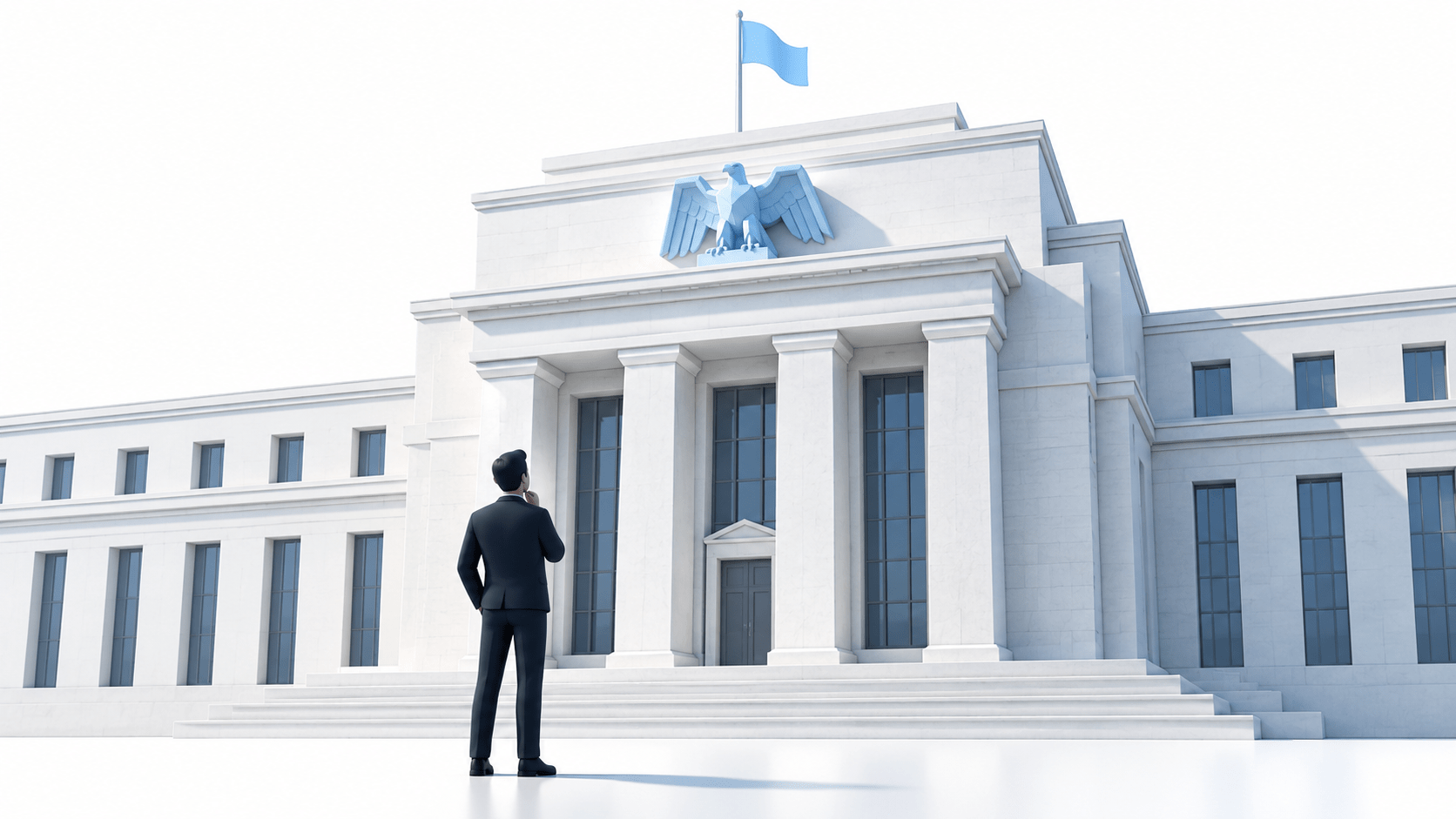
The Federal Reserve, usually called the Fed, is the central bank of the United States.
Its job is to help keep the country’s financial system and economy stable.
It does this mainly through monetary policy, which means influencing the conditions under which money and credit flow through the economy.
In simple terms, you can think of the Fed as one of the organizations responsible for helping prevent the economy from getting too hot or too cold.
But the Fed wasn’t always around.
Why Was the Fed Created?
Before the Federal Reserve existed, the United States experienced repeated banking crises and financial panics.
One particularly serious panic happened in 1907, when problems in the banking system spread through financial markets.
The crisis helped convince American policymakers that the country needed a better system for dealing with financial instability.
In 1913, Congress created the Federal Reserve System.
Rather than creating one giant central bank, the United States created a system made up of a central Board of Governors and 12 regional Federal Reserve Banks.
The system has evolved considerably since then, but its basic purpose remains: helping maintain stability in the financial system and economy.
What Does the Fed Actually Do?
One of the Fed’s most important jobs is controlling monetary policy.
Its most famous tool is interest rates.
When inflation is too high, the Fed can raise interest rates. This makes borrowing more expensive and can slow spending and investment.
When the economy is struggling, the Fed can lower interest rates, making borrowing cheaper and potentially encouraging more economic activity.
Think of it like a car.
When the economy is moving too quickly, the Fed can try to apply the brakes.
When it is moving too slowly, it can try to press the accelerator.
Of course, the real economy is much more complicated than a car.
Why Do Investors Care About the Fed?
The Fed doesn’t directly control stock prices.
But its decisions can affect almost everything around them.
Interest rates influence borrowing, bonds, mortgages, business investment and consumer spending.
That eventually affects companies and their profits.
This is why investors pay so much attention when the Fed speaks.
A single decision about interest rates can change how investors view the entire market.
And sometimes, the market can move before the Fed even does anything.
That’s because investors are constantly trying to predict what comes next.
Who Actually Makes the Decisions?
When people say “the Fed decided…”, they’re usually talking about the Federal Open Market Committee, or FOMC.
The FOMC is the group responsible for making key monetary-policy decisions.
It has 12 voting members, including the seven members of the Fed’s Board of Governors and the president of the Federal Reserve Bank of New York, along with four other regional Reserve Bank presidents who rotate into voting positions.
The FOMC normally meets eight times a year.
At these meetings, policymakers examine inflation, employment, economic growth and other conditions before deciding what they believe monetary policy should look like.
So when investors say they’re “waiting for the Fed meeting,” this is what they’re waiting for.
Who Picks the People at the Fed?
The Fed has some independence from day-to-day politics, but it isn’t completely separate from government.
The seven members of the Board of Governors are nominated by the U.S. President and confirmed by the Senate.
The President also chooses the Fed Chair from among those governors, subject to Senate confirmation.
This creates an interesting balance.
The Fed is connected to the government, but its monetary-policy decisions are designed to be made independently rather than simply following the wishes of whoever is currently president.
That independence is considered important because economic stability often requires decisions that may be unpopular in the short term.
The Fed Isn’t Trying to Make Your Stocks Go Up
This is an important distinction for investors.
The Fed isn’t sitting around asking:
“How can we make the stock market rise this year?”
Its broader goals are price stability and sustainable economic growth.
Sometimes those goals happen to be good for stocks.
Sometimes they aren’t.
For example, raising interest rates to fight inflation can create difficult conditions for investors.
But that doesn’t mean the Fed is trying to hurt the stock market.
It is responding to the broader economy.
The Psychology of the Fed
There is also a fascinating psychological side to the Fed.
Investors don’t only react to what the Fed does.
They react to what they expected the Fed to do.
Imagine everyone expects an interest-rate cut.
The Fed cuts rates exactly as expected.
The market might barely move.
Why?
Because investors had already priced that possibility into their decisions.
But if the Fed does something unexpected, markets can react dramatically.
This is a useful lesson in investing psychology:
Markets don’t simply react to events. They react to the gap between expectations and reality.
That is why following every Fed headline isn’t necessarily useful.
Sometimes, understanding what investors already expect is more important than simply knowing what happened.
Final Thought
The Federal Reserve can seem complicated when you first start investing.
There are interest rates, FOMC meetings, inflation reports, economic forecasts and endless predictions about what the Fed might do next.
But the basic idea is fairly simple.
The Fed is America’s central bank. It was created in 1913 to help create a more stable financial and monetary system, and today it uses monetary policy to influence the economy.
As an investor, you don’t need to predict every decision the Fed makes.
You simply need to understand what it is, what it is trying to accomplish, and why its decisions matter.
Once you do, those intimidating headlines about “the Fed” start to make a lot more sense.
Recommended Reading
The Federal Reserve and the Financial Crisis — Ben S. Bernanke
If you want to go deeper, this is probably the most fitting book for this article. Bernanke served as Federal Reserve Chair from 2006 to 2014, and the book is based on four lectures he gave about the Fed, its history, and its response to the 2008 financial crisis. It is only around 140 pages, making it much less intimidating than a typical economics book.

Stefan Theron
Founder of Pathidon
Stefan holds a degree in Psychology and an MBA, and has spent years studying behavioral finance, market psychology, and the decision-making patterns that shape how people invest — bridging the gap between financial knowledge and human behavior.