What Is a Stock Exchange? A Beginner’s Guide to How Stock Exchanges Work
You tap “Buy” on your phone. A few seconds later, you own a piece of a company.
It feels almost too simple. No paperwork, no phone calls, no waiting around for someone to agree to sell you their shares. Just a tap, a confirmation, and it’s done.
That simplicity is doing a lot of work behind the scenes. And understanding what’s actually happening — instead of just trusting the app — is one of the quietest ways to become a calmer, more confident investor.
There’s No Single “Stock Market”
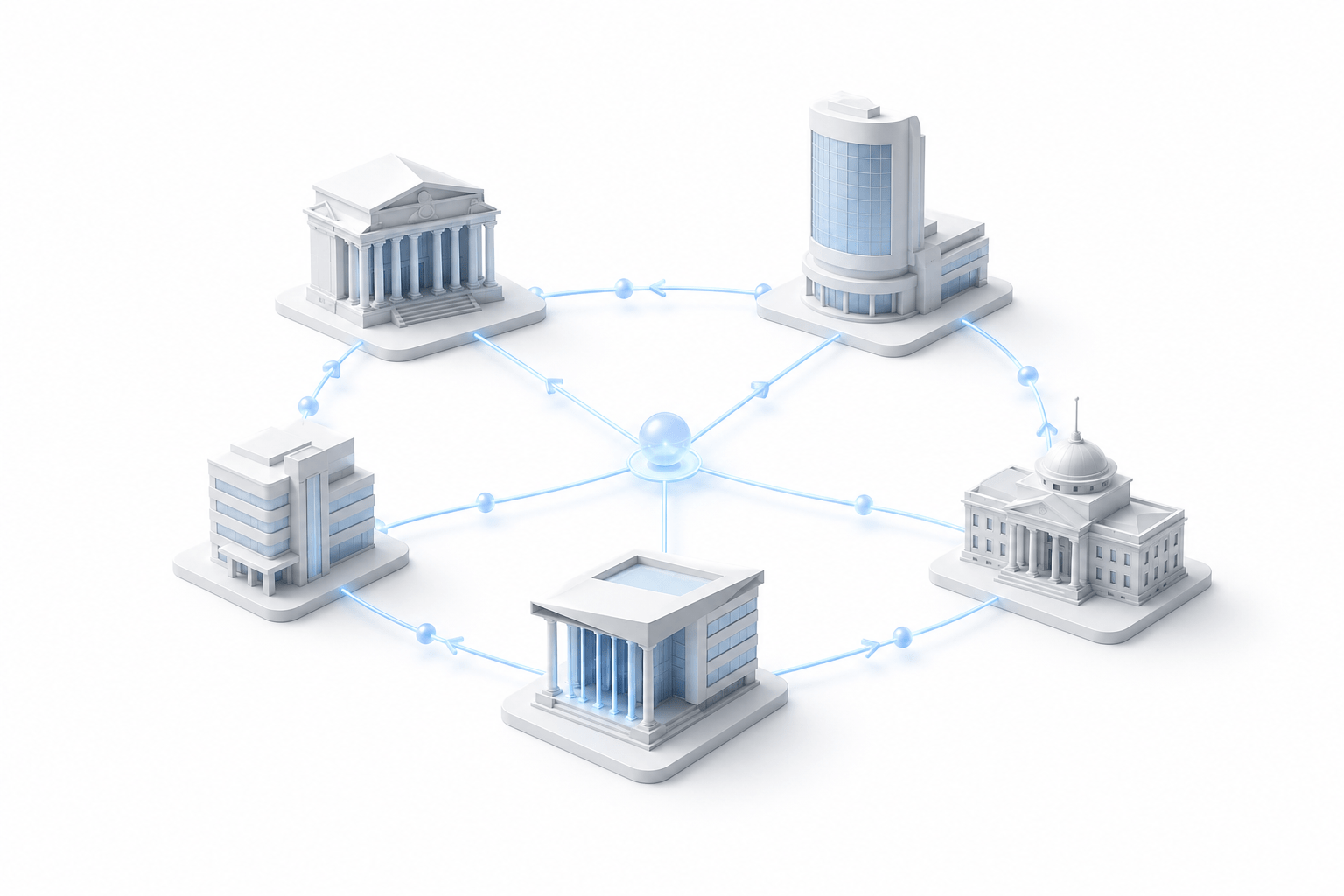
New investors often picture the stock market as one big room where everything trades. In reality, the stock market is more like an idea — the general system of investors, companies, and brokers buying and selling shares.
The actual buying and selling happens on stock exchanges: organized marketplaces where companies list their shares and investors trade them. The New York Stock Exchange, the Nasdaq, the Korea Exchange — these are the real, physical (or digital) places where trades get matched.
The exchange doesn’t own the companies listed on it, and it doesn’t decide who buys or sells. Its job is narrower and more important than that: it provides the rules, technology, and oversight that let strangers trade with each other safely, thousands of times a second.
This distinction matters more than it seems. When you understand that “the market” is really a network of specific, regulated marketplaces, headlines like “the market fell today” start to feel less like a single verdict and more like what they are — a snapshot of activity across a system with rules built into it.
Why Exchanges Exist: Solving a Trust Problem
Imagine buying a stock without an exchange. You’d need to track down someone who owns it, agree on a price, confirm they actually own the shares, handle the paperwork, and transfer money — hoping neither of you backs out halfway through.
Now imagine millions of people trying to do that every day, for thousands of different companies.
That’s the exact problem exchanges solve. They bring buyers and sellers together in one place, standardize the process, and let trades complete in seconds instead of days. You’re not trusting a stranger on the other end of your trade — you’re trusting a regulated system built to make sure the trade happens fairly, whoever the other side turns out to be.
That’s worth sitting with for a second, because it’s the reason investing feels safe enough to do from your phone. The trust isn’t in the person buying your shares. It’s in the structure around the trade.
What an Exchange Actually Does
An exchange is more than a matchmaker. It’s infrastructure. Its core jobs include:
- Letting companies list their shares publicly
- Matching buy and sell orders
- Publishing real-time prices
- Enforcing trading rules
- Watching for manipulation or unfair practices
- Making sure transactions settle properly
Most investors never interact with an exchange directly. Your brokerage app sits between you and it. But every single trade you make depends on this quiet layer of infrastructure doing its job correctly, every time.
What Happens When You Hit “Buy”
Your brokerage receives your order and routes it to the appropriate exchange. The exchange’s system looks for a matching seller at your price. Once it finds one, the trade executes electronically. Within seconds, ownership transfers, and your brokerage account updates.
The exchange plays the role of the marketplace — not the buyer, the seller, or your advisor.
The speed is part of why investing can feel deceptively casual. When something takes two seconds, it doesn’t feel like a real financial decision the way signing a mortgage does. Worth remembering: fast doesn’t mean small. It’s still your money and still a real decision — the interface is just really good at making it feel effortless.
Why Companies Want to Be Listed
Listing on an exchange gives a company access to something hard to get otherwise: capital from millions of potential investors, instead of relying solely on banks or private funding. That money can go toward new products, hiring, expansion, or research.
But raising money isn’t the only draw. Major exchanges have listing requirements — standards around financial reporting, governance, and disclosure — that companies must meet before they can list. Meeting those standards is itself a signal. It tells investors, analysts, and institutions that a company has passed a baseline level of scrutiny.
This is a useful thing to notice as an investor: the fact that a company is listed on a reputable exchange isn’t a guarantee of anything, but it does mean it’s operating under a level of oversight that private companies don’t have to answer to.
Listed companies also gain liquidity — the ability for shareholders to buy or sell easily, without needing to find a private buyer willing to negotiate.
Not Every Exchange Is the Same
Each exchange sets its own bar for entry — minimum company value, share price, financial history, or number of shareholders. A young startup might not qualify for one of the world’s largest exchanges yet, while an established multinational clears the bar easily. Geography matters too: many companies list where they operate or where most of their investors are based.
| Exchange | Country | Best Known For |
| New York Stock Exchange (NYSE) | United States | Large, established global companies |
| Nasdaq | United States | Technology and growth-focused businesses |
| London Stock Exchange (LSE) | United Kingdom | International companies and financial firms |
| Tokyo Stock Exchange (TSE) | Japan | Japan’s largest public companies |
| Korea Exchange (KRX) | South Korea | Home to many of Korea’s leading businesses |
For a sense of scale: as of March 2026, Nasdaq overtook the NYSE as the world’s largest exchange by market capitalization, at roughly $35 trillion versus the NYSE’s roughly $31 trillion, according to World Federation of Exchanges data — a shift driven largely by tech-sector growth. That ranking moves around over time, which is exactly the point. Size and rank shift with the market; the underlying role these exchanges play doesn’t.
Some companies choose to list on more than one exchange — known as cross-listing — to reach investors in different regions and increase trading activity. It comes with the tradeoff of more regulatory requirements to keep up with, which is why most companies stick to one primary listing.
The Takeaway
An exchange isn’t where your money “goes.” It’s the trusted structure that lets your trade happen safely, in seconds, with someone you’ll never meet. Next time you tap “Buy,” it’s worth remembering: the ease of that tap is the product of a system built specifically to earn your trust, one trade at a time. Understanding that system — instead of just tapping and trusting — is a small shift that makes you a steadier, more grounded investor.
Recommended Reading
A Random Walk Down Wall Street by Burton G. Malkiel
One of the best books for new investors, A Random Walk Down Wall Street explains how financial markets work, why stock prices behave the way they do, and why long-term investing often outperforms trying to beat the market. It also introduces concepts like stock exchanges, market efficiency, and index investing in a clear, approachable way, making it an excellent companion to this article.
Disclosure: Some links in this article may be affiliate links, meaning Pathidon may earn a small commission at no extra cost to you.

Stefan Theron
Founder of Pathidon
Stefan holds a degree in Psychology and an MBA, and has spent years studying behavioral finance, market psychology, and the decision-making patterns that shape how people invest — bridging the gap between financial knowledge and human behavior.