Why the Stock Market Ignores Bad News: The Psychology of Investor Habituation
Why Investors Stop Reacting to Repeated Bad News
You check your portfolio after another Middle East headline. Brent crude is up again. Stocks are… barely moving.
Six months ago, that same headline would have sent everything red. Now it barely registers. Did the risk go away? Or did you just stop noticing it?
That gap — between how dangerous something feels and how dangerous it actually is — is one of the most useful things to understand as an investor. Psychologists have a name for it: habituation.
Why Repeated Danger Stops Feeling Dangerous
Habituation is simple. When you’re exposed to the same stimulus over and over without a major consequence, your emotional reaction to it gets weaker. Not because the thing changed — because you did.
Anyone who’s lived near train tracks knows this. The first week, every train wakes you up. A month in, you sleep right through it. The trains didn’t get quieter. Your brain just decided they weren’t worth the alarm anymore.
Markets, which are really just millions of human nervous systems trading with each other, do the same thing.

A Real Example: Markets and the 2026 Iran War
You don’t have to look far for this. Watch how markets treated the same conflict at two different points in 2026.
When the US and Israel went to war with Iran on February 28, 2026, the market reacted the way you’d expect to a genuine shock. Brent crude prices surged into the low-to-mid $80s a barrel within days, and the S&P 500 fell about 9.7% in an orderly decline before staging one of the most aggressive recoveries in its history. By mid-April, the S&P 500 had climbed back above 7,000 for the first time ever, with the Nasdaq also hitting a fresh record — investors effectively deciding the war-related losses were behind them.
Then, in early July, the conflict flared up again. Trump told reporters the ceasefire was “over,” and the US struck Iran again. Oil jumped and the Dow fell more than 1%, but the S&P 500 slipped only 0.28% — and the Nasdaq actually closed slightly higher that day.
Same war. Same kind of headline. A much smaller market reaction the second time around.
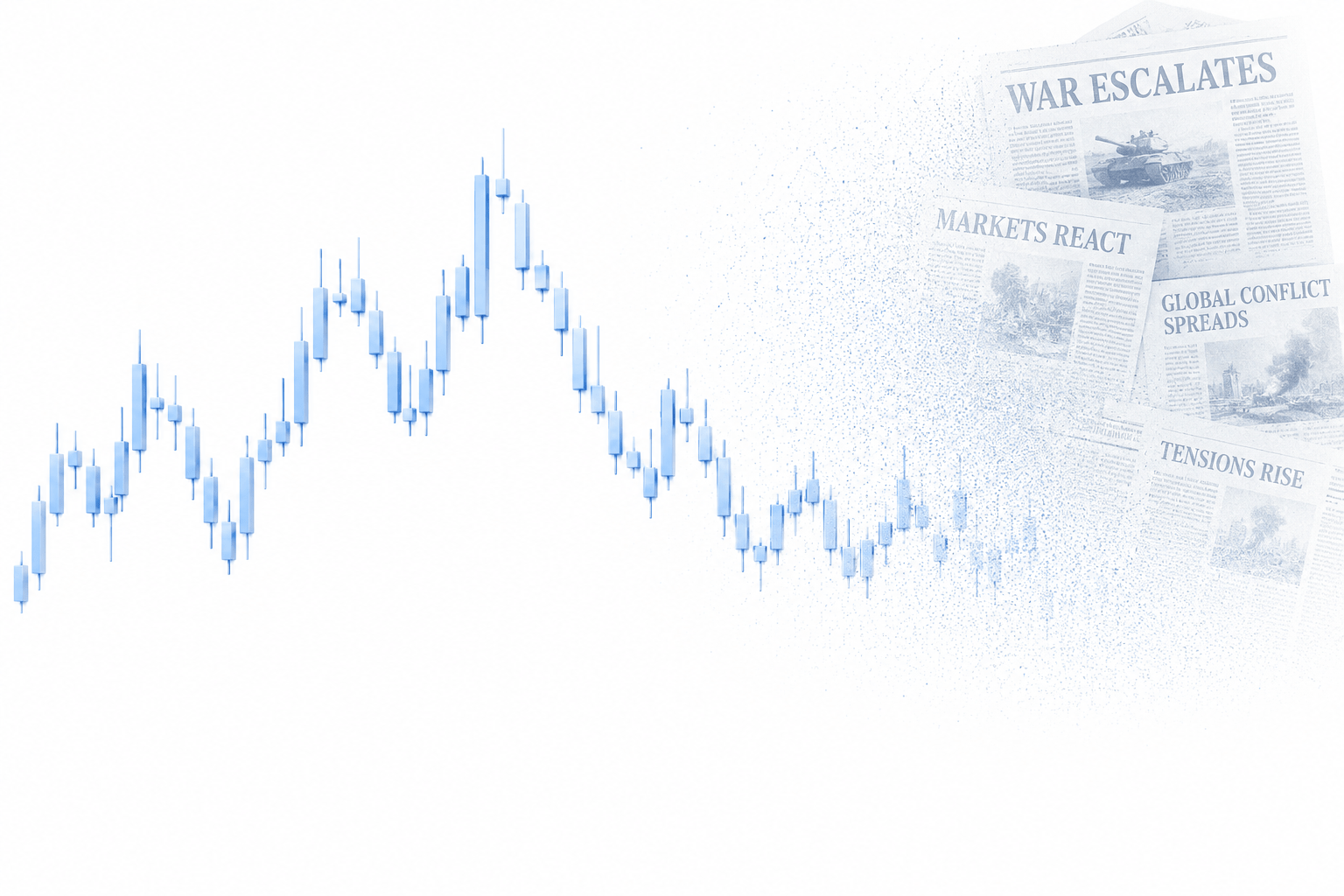
That’s not the market deciding the conflict matters less. It’s the market — meaning all of us — getting used to the story.
Feeling Less Afraid Doesn’t Mean You’re Less at Risk
Here’s the mental trap: if something stops feeling dangerous, we assume it’s probably not dangerous anymore. But “how risky is this?” and “how strongly do I feel about it?” are two completely different questions. Habituation only answers the second one.
The Strait of Hormuz didn’t become less strategically important between February and July 2026. It still carries roughly a fifth of the world’s oil and gas shipments, and any serious disruption there still has real consequences for energy prices, inflation, and company earnings. What changed wasn’t the stakes. It was our nervous system’s response to hearing about them again.
The “It Shrugged It Off Last Time” Trap
There’s a second trap layered on top of the first. Once you’ve watched the market shrug off a headline once, it’s tempting to assume it’ll shrug off the next one too — without asking whether anything about the underlying situation has actually shifted.
This is habituation teaming up with a second bias: social proof, where we look to the crowd’s reaction as a stand-in for our own judgment. If everyone else seems calm, we assume they know something we don’t.
Sometimes they do. Often, they’re just as habituated as you are. A muted market reaction can mean the risk really has faded — or it can just mean everyone’s gotten used to the noise.
Separating How You Feel From What’s True
Habituation isn’t dangerous because it’s wrong most of the time. It’s dangerous because it’s right most of the time — until the one time it isn’t. And by then, you’ve stopped looking.
The fix isn’t to feel more alarmed. It’s to stay in the habit of checking, even when nothing feels urgent.
Start by finding the number instead of waiting for your gut to flag one. Oil prices, shipping volumes, a company’s latest guidance — comfort tells you everything’s fine, but a five-minute check tells you whether that’s actually true. In the July 2026 Iran flare-up, the market’s calm reaction wasn’t wrong — the Strait of Hormuz genuinely hadn’t closed. But that was only obvious to anyone who went and checked. Matching the market’s mood would have gotten you the right answer by accident, not by method.
From there, don’t stop at “could this get worse.” Name the specific trigger that would actually matter — a shipping route closing, a major producer cutting output — and verify whether it’s moving closer or further away. This is the step most people skip, because it’s exactly the step habituation talks you out of taking.
And don’t just do this once. Revisit your exposure on a schedule, not only when something scares you. The quiet failure mode is doing the research once, feeling satisfied, and never checking again — even as circumstances shift under a headline that’s gone silent. A recurring monthly check is enough: does anything in my portfolio actually sit downstream of this risk?
The goal isn’t constant vigilance that exhausts you. It’s making “go look it up” a reflex that fires before comfort has a chance to make the decision for you.
The Takeaway
A quiet market reaction to a big headline isn’t proof the danger has passed — it might just mean investors have gotten used to hearing about it. Next time a market-moving story breaks and nothing much happens, don’t ask whether everyone else seems calm. Ask whether the facts on the ground have actually changed. That question, not the market’s mood, is what your decisions should be built on.
Recommended Reading
The Signal and the Noise— Nate Silver
A thoughtful exploration of probability, uncertainty, and why people often misjudge risk. It’s an excellent companion to this article and reinforces the importance of separating emotion from evidence.
Disclosure: Some links in this article may be affiliate links, meaning Pathidon may earn a small commission at no extra cost to you.

Stefan Theron
Founder of Pathidon
Stefan holds a degree in Psychology and an MBA, and has spent years studying behavioral finance, market psychology, and the decision-making patterns that shape how people invest — bridging the gap between financial knowledge and human behavior.