
Why Are Treasury Yields Rising? What Investors Should Do Now
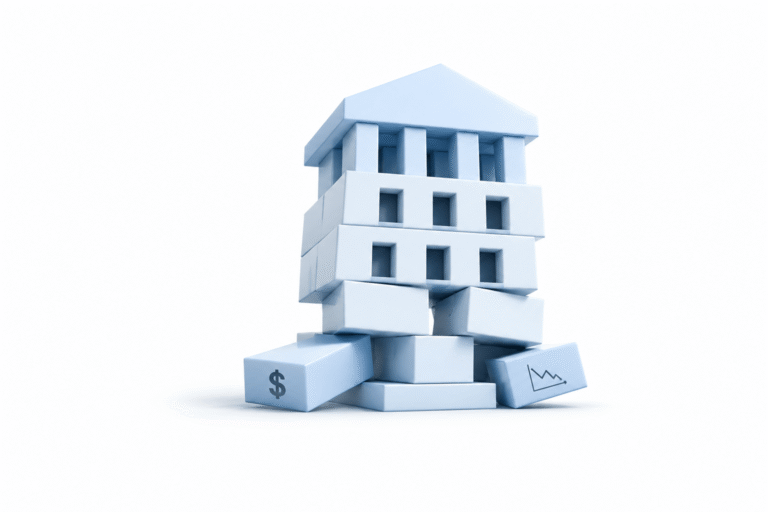
Rising Treasury yields, renewed inflation concerns, and changing expectations for interest rates are creating a difficult environment for investors. But the biggest risk may not be higher yields themselves—it may be how investors react to them.
If you’ve been following the markets lately, you’ve probably noticed one thing:
Bond yields are rising.
The U.S. 10-year Treasury yield has climbed close to 4.8%, its highest level in almost three years. At the same time, investors are reassessing the path of interest rates as stronger economic data and higher energy prices raise concerns about inflation.
The result is a difficult question:
What happens to interest rates from here?
And, more importantly for investors:
What should I do about it?
The answer may have less to do with predicting interest rates—and more to do with understanding your own psychology.
Why Are Treasury Yields Rising Right Now?
There isn’t one single reason.
Inflation is still a concern
U.S. inflation was running at 3.4% year over year in July, well above the Federal Reserve’s 2% target. The next inflation report, covering August, is due September 11.
At the same time, oil prices have risen sharply amid escalating tensions in the Middle East. Higher energy prices can feed into transportation, production and consumer prices, creating renewed concerns about persistent inflation.
If inflation remains elevated, investors have less confidence that interest rates will fall quickly.
Interest-rate expectations are changing
Markets had previously been focused on the possibility of lower interest rates.
Now that assumption is being challenged.
Stronger economic data and renewed inflation concerns have pushed up the odds that the Federal Reserve keeps rates higher—or raises them again. Right now, markets are roughly split on whether the Fed hikes at its September meeting, and that estimate has been swinging by the week as new data and Fed commentary come in. That back-and-forth is itself a useful signal: even professional traders don’t have a confident answer here.
Government borrowing is another factor
Heavy government borrowing means investors need to absorb a large supply of new bonds. Concerns about fiscal deficits and rising debt can lead investors to demand higher yields for holding longer-term government debt.
Put together, you have a bond market dealing with inflation uncertainty, rate uncertainty, geopolitical risk and fiscal concerns.
And uncertainty is where investor psychology becomes particularly important.
The Psychological Problem With Uncertainty
When markets become difficult to interpret, investors naturally start looking for answers.
Will the Fed hike?
Will yields keep climbing?
Will stocks fall?
Should I sell?
Should I buy bonds?
These questions feel sensible.
But there’s a psychological trap hiding underneath them.
We often confuse prediction with preparation.
Instead of asking:
“What is my investment plan?”
we start asking:
“What do I think happens next?”
And suddenly our portfolio decisions depend on our ability to forecast something that even professional investors cannot consistently predict.
Rising Yields Don’t Automatically Mean “Sell”
Higher bond yields can put pressure on stocks. When bonds pay more, they become a more attractive alternative to stocks—and higher yields also mean future company earnings are worth a little less in today’s dollars, which can weigh on stock prices.
But that doesn’t mean rising yields automatically signal a stock-market collapse.
Why yields are rising matters.
If yields rise because economic growth is strong, companies may benefit from stronger earnings.
If yields rise because inflation is accelerating, the implications are different.
If yields rise because investors are demanding greater compensation for fiscal risk, that’s different again.
The number alone isn’t the entire story.
And this is where narrative bias can become dangerous.
Investors want a simple explanation for complex events. Once we decide why yields are rising, we tend to seek information that confirms our interpretation.
That’s how a market observation can quickly become an emotional investment decision.
So What Should Investors Actually Do?
1. Treat market movements as information—not instructions
A rising Treasury yield is information.
It isn’t automatically an instruction to sell your stocks.
Ask:
“Does this actually change the reason I own this investment?”
If the answer is no, you may not need to change anything.
2. Know your time horizon
Someone investing for 30 years has a very different problem from someone who needs their money next year.
Before reacting to today’s bond market, ask:
“When will I actually need this money?”
Your time horizon should matter more than today’s headline.
3. Stress-test instead of predict
Rather than trying to predict whether rates rise or fall, consider both possibilities.
If rates rise further, what happens to my portfolio?
If rates fall sharply, what happens?
You don’t need to know which scenario will occur.
You need a plan that can survive more than one scenario.
4. Don’t confuse discomfort with danger
This may be the most important lesson.
Sometimes your portfolio feels uncomfortable because something is genuinely wrong.
But sometimes it feels uncomfortable simply because uncertainty has increased.
Those aren’t the same thing.
Your brain may interpret uncertainty as danger.
But uncertainty is simply the absence of certainty.
Final Thought: Don’t Let Uncertainty Make Your Decisions for You
The bond market is sending investors important signals.
Inflation risks haven’t disappeared. Interest-rate expectations are changing. Energy prices are creating another layer of uncertainty, while government borrowing remains a concern.
But a market signal isn’t automatically an investment instruction.
The better question isn’t:
“Where will interest rates go next?”
It’s:
“What would actually make me change my investment plan?”
You don’t need to know exactly how high the 10-year Treasury goes.
You don’t need to know whether the Fed hikes or holds.
You need to understand your goals, your time horizon, your risk tolerance, and the assumptions behind your portfolio.
The goal of investing isn’t to eliminate uncertainty. It’s to build a decision-making process that can survive it.
What to Watch Next
The next major test for the current bond-market narrative will be U.S. inflation data. The August CPI report is scheduled for September 11, ahead of the Federal Reserve’s September 15–16 meeting. Markets will be watching closely for evidence that inflation is cooling—or that higher energy prices are beginning to push it higher again.
For investors, the important question isn’t simply what the number will be.
It’s how you’ll respond to it.
Recommended Reading
Thinking in Bets — Annie Duke
If you’re interested in the psychology behind investing under uncertainty, Annie Duke’s Thinking in Bets is an excellent next read.
The book focuses on making decisions when you don’t have all the information—and separating the quality of a decision from its eventual outcome. That’s highly relevant to investing, where a good decision can still produce a bad short-term result, and a bad decision can occasionally get lucky.
Its central lesson fits today’s bond market particularly well:
You don’t need certainty to make a good decision.
You need to understand what you know, what you don’t know, and how confident you should be in your assumptions.
And that’s exactly the mindset investors need when markets stop providing easy answers.
Disclosure: Some links in this article may be affiliate links, meaning Pathidon may earn a small commission at no extra cost to you.

Stefan Theron
Founder of Pathidon
Stefan holds a degree in Psychology and an MBA, and has spent years studying behavioral finance, market psychology, and the decision-making patterns that shape how people invest — bridging the gap between financial knowledge and human behavior.