Money Beliefs Explained: How Your Childhood Shapes Your Spending and Investing Habits
Let’s start with something uncomfortable
Most people think their money habits come from logic.
They don’t.
They come from memory.
From childhood moments you didn’t realize were shaping you.
From things your parents said casually at the dinner table.
From what you felt when money was tight… or when it was abundant.
Long before you ever bought your first stock or worried about saving,
you were already forming a belief system about money.
And here’s the problem:
You’re still using that same belief system today—whether you realize it or not.
The Hidden Script You’re Following
Everyone has a “money script.”
It’s not written down.
You didn’t consciously choose it.
But it shows up in subtle ways:
- You hesitate before spending, even when you can afford it
- You feel a rush when investing… or anxiety
- You avoid checking your bank account
- You overspend to “feel something”
- You hoard cash but avoid investing
These behaviors aren’t random.
They’re echoes.

Where It Actually Comes From
Let’s make this real.
Think back to your upbringing.
Not just what happened, but how it felt.
Ask yourself:
- Was money openly discussed, or was it a source of tension?
- Did your family save aggressively—or spend freely?
- Did you ever hear phrases like:
- “Money doesn’t grow on trees”
- “We can’t afford that”
- “Rich people are greedy”
- “You need money to feel secure”
You didn’t just hear these.
You absorbed them.
And your brain did something very powerful:
It turned repeated experiences into truths.
Why This Matters for Investing
Now fast forward to today.
The market drops.
What happens next is not about logic.
It’s about your conditioning.
If you grew up around scarcity:
- You may panic sell quickly
- Losses feel threatening, not temporary
- Cash feels “safe,” even when it’s losing value
If you grew up around risk-taking:
- You may overinvest or chase trends
- You might underestimate downside risk
- You confuse confidence with control
If money was a source of stress:
- You might avoid investing altogether
- Or constantly second-guess decisions
- Or obsessively check your portfolio
Same market.
Different reactions.
It Doesn’t Stop at Investing
Your money beliefs shape everything:
Spending
- Do you feel guilt when buying something nice?
- Or do you spend impulsively to reward yourself?
Saving
- Do you save out of fear?
- Or struggle to save because money feels temporary?
Lifestyle
- Do you associate wealth with freedom—or pressure?
- Do you avoid appearing “too successful” or “too poor”?
This is bigger than finance.
It’s identity.
A Simple Self-Reflection Exercise
Let’s slow this down and make it personal.
Grab a notebook (or just think honestly).
Step 1: Recall Early Money Memories
Write down 3–5 vivid memories involving money from your childhood.
Not just facts—focus on emotions.
- What happened?
- How did you feel?
Step 2: Identify the Pattern
Look at those memories and ask:
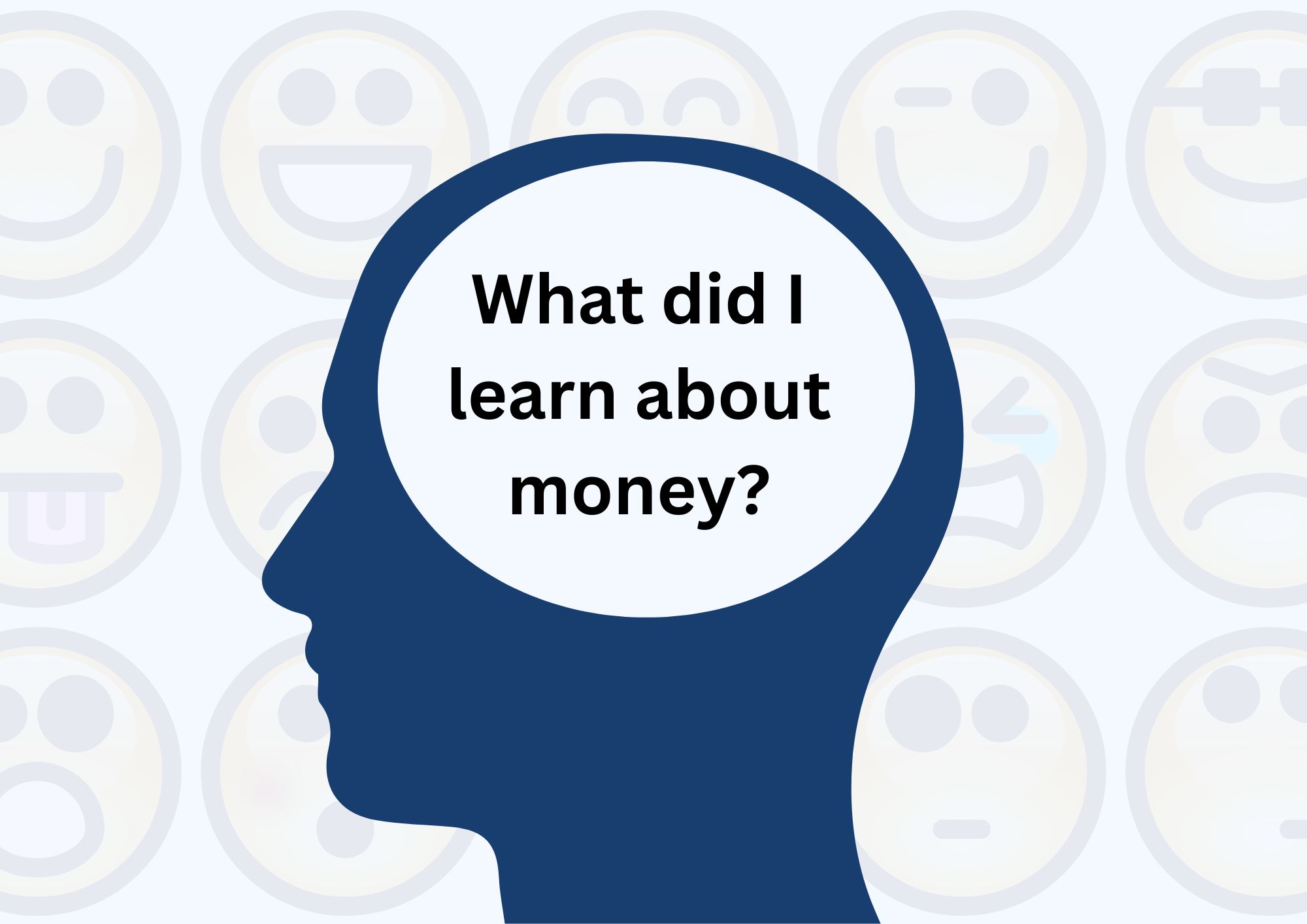
👉 What did I learn about money from this?
Examples:
- “Money is scarce”
- “Money causes stress”
- “Money equals status”
- “Money should be protected at all costs”
Step 3: Connect It to Today
Now ask:
👉 Where is this belief showing up in my life today?
Be specific.
- In your investing decisions
- In your spending habits
- In your financial anxiety or confidence
Step 4: Challenge It
This is the important part.
Ask yourself:
👉 Is this belief actually true… or just familiar?
Because many of your money beliefs were formed
when you had no control, no context, and no alternatives.
You’re allowed to update them.
The Shift Most People Never Make
Most people try to improve their finances by changing tactics:
- Better budgeting
- Better stock picks
- More discipline
But they ignore the foundation.
Your behavior won’t permanently change
until your belief system does.
That’s the real leverage.
Final Thought
You are not just an investor.
You are a product of experiences, emotions, and patterns that were formed long before you ever thought about money.
The market doesn’t just test your strategy.
It tests your story.
And if you don’t understand the story you’re carrying,
you’ll keep repeating it—
in your spending, your saving, and your investing.
But once you see it clearly…
You get something most people never have:
Choice.

Stefan Theron
Founder of Pathidon
Stefan holds a degree in Psychology and an MBA, and has spent years studying behavioral finance, market psychology, and the decision-making patterns that shape how people invest — bridging the gap between financial knowledge and human behavior.