Investor Personality: Why You Make Bad Investment Decisions (And How to Fix It)
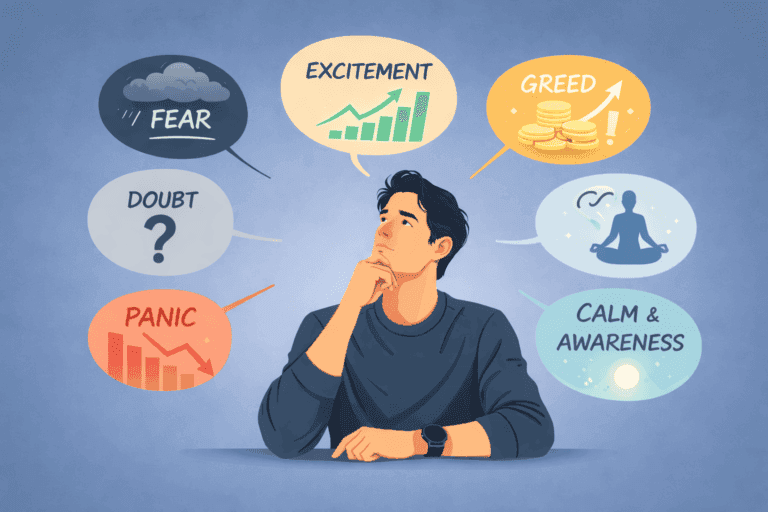
The Moment Logic Breaks Down
Most people believe their investment decisions are driven by logic.
You analyze charts. You read earnings reports. You compare ETFs. You build what looks like a rational portfolio.
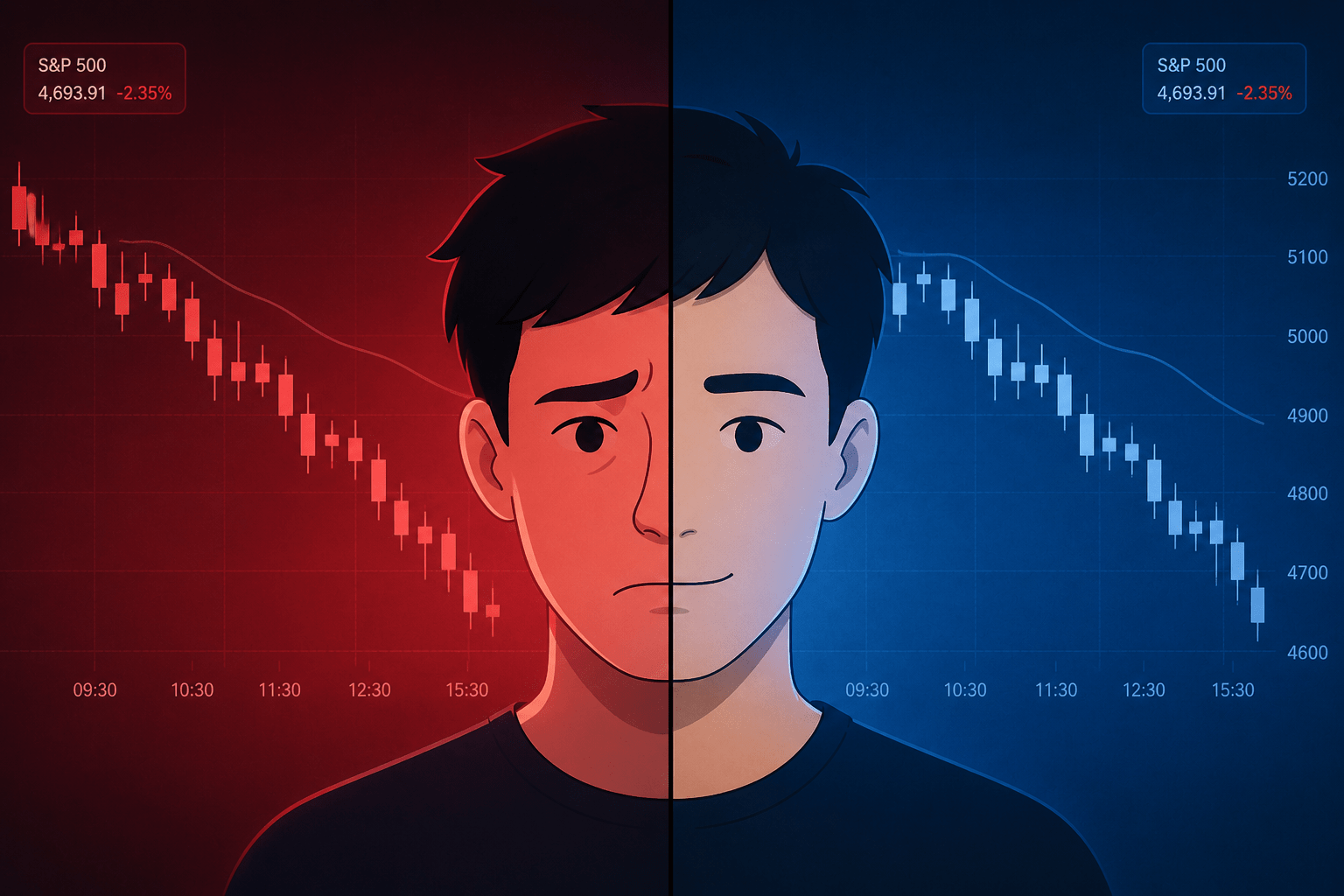
But then the market drops 15%… and suddenly logic disappears.
“Two investors. Same portfolio.
One sells everything at -15%.
The other buys more.
Same strategy. Completely different outcome.”
Because investing isn’t just about knowledge.
It’s about who you are.
Personality: The Hidden Force Behind Every Decision
Two investors can look at the exact same stock and come to completely different conclusions.
- One sees opportunity
- The other sees risk
The difference isn’t intelligence.
It’s personality.
Your personality shapes:
- How you perceive risk
- How you react to losses
- How patient you are
- How much uncertainty you can tolerate
In other words, it determines not just what you invest in — but how you behave when it matters most.
And behavior, more than anything, determines long-term returns.

Why Most Investors Struggle
Most investing advice assumes everyone thinks the same.
“Stay calm.”
“Buy the dip.”
But people don’t experience risk the same way.
Some lean in during volatility. Others pull back.
When your strategy doesn’t match your personality, you feel it fast:
- Panic selling
- Overtrading
- Freezing
- Constant doubt
It’s not a knowledge problem.
It’s a self-awareness problem.
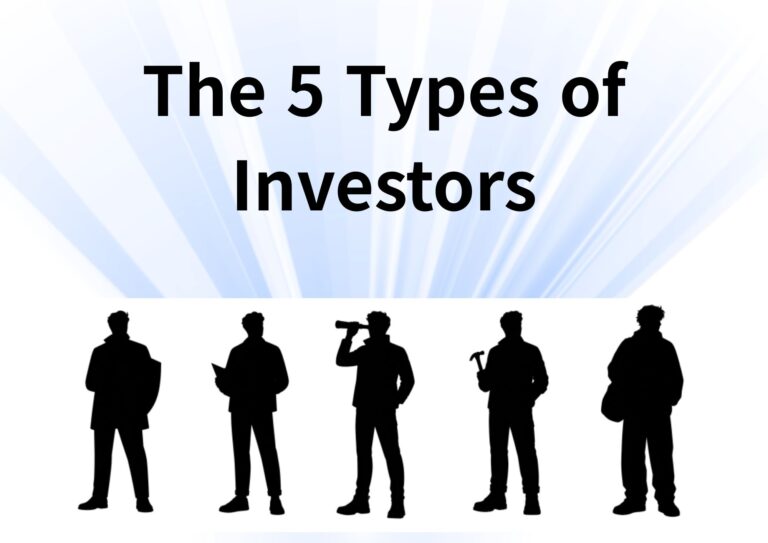
Introducing Investor Personalities
At Pathidon, we start with a different question:
“What kind of investor are you?”
Because once you understand that, everything else gets easier.
Here are a few simplified types:
The Guardian
Stability-focused. Prefers income and consistency.
Risk: Too conservative.
The Explorer
Opportunity-driven. Drawn to growth and new ideas.
Risk: Chasing too much.
The Drifter
Reactive and inconsistent. Influenced by noise.
Risk: No clear direction.
The Navigator
Structured and logical. Builds systems and plans.
Risk: Overconfidence in models.
Most people are a mix — but one usually leads.
The Cost of Ignoring Your Personality
If you don’t understand your investing personality, you end up:
- Copying strategies that don’t fit you
- Comparing yourself to investors with completely different mindsets
- Blaming yourself for “bad decisions” that were actually predictable
For example:
A risk-averse investor trying to trade volatile growth stocks will constantly feel stress.
A high-risk investor stuck in conservative ETFs will feel bored… and eventually take impulsive risks elsewhere.
This mismatch creates friction.
And friction leads to poor decisions.
Alignment Changes Everything
The goal isn’t to change your personality.
The goal is to build a strategy that works with it.
When your investing style aligns with your personality:
- Decisions feel clearer
- Emotions become manageable
- Consistency improves
- Confidence increases
You stop fighting yourself.
And that’s when real progress begins.
A Shift in How You Approach Investing
Instead of asking:
“What’s the best investment right now?”
Start asking:
“What kind of investor am I becoming?”
That shift changes everything.
Because the best portfolio in the world won’t work if you can’t stick with it.
But a good portfolio that matches your personality?
That’s powerful.
Where This Goes Next
Understanding your investor personality is just the beginning.
Once you identify it, you can:
- Build a portfolio tailored to your behavior
- Create decision frameworks that reduce emotional mistakes
- Develop systems that keep you consistent during volatility
At Pathidon, we’re building tools designed specifically for this:
- Personality-based investor profiles
- Decision behavior analysis
- Personalized investing frameworks
- Psychological performance tracking
Not just what to invest in — but how you make decisions.
Final Thought
The market doesn’t just test your knowledge.
It tests your personality.
And whether you succeed as an investor often comes down to one simple question:
Are you investing in a way that matches who you are…
or are you constantly trying to be someone else?
Because the more your strategy reflects your personality,
the less you’ll rely on willpower…
…and the more naturally good decisions will follow.

Stefan Theron
Founder of Pathidon
Stefan holds a degree in Psychology and an MBA, and has spent years studying behavioral finance, market psychology, and the decision-making patterns that shape how people invest — bridging the gap between financial knowledge and human behavior.