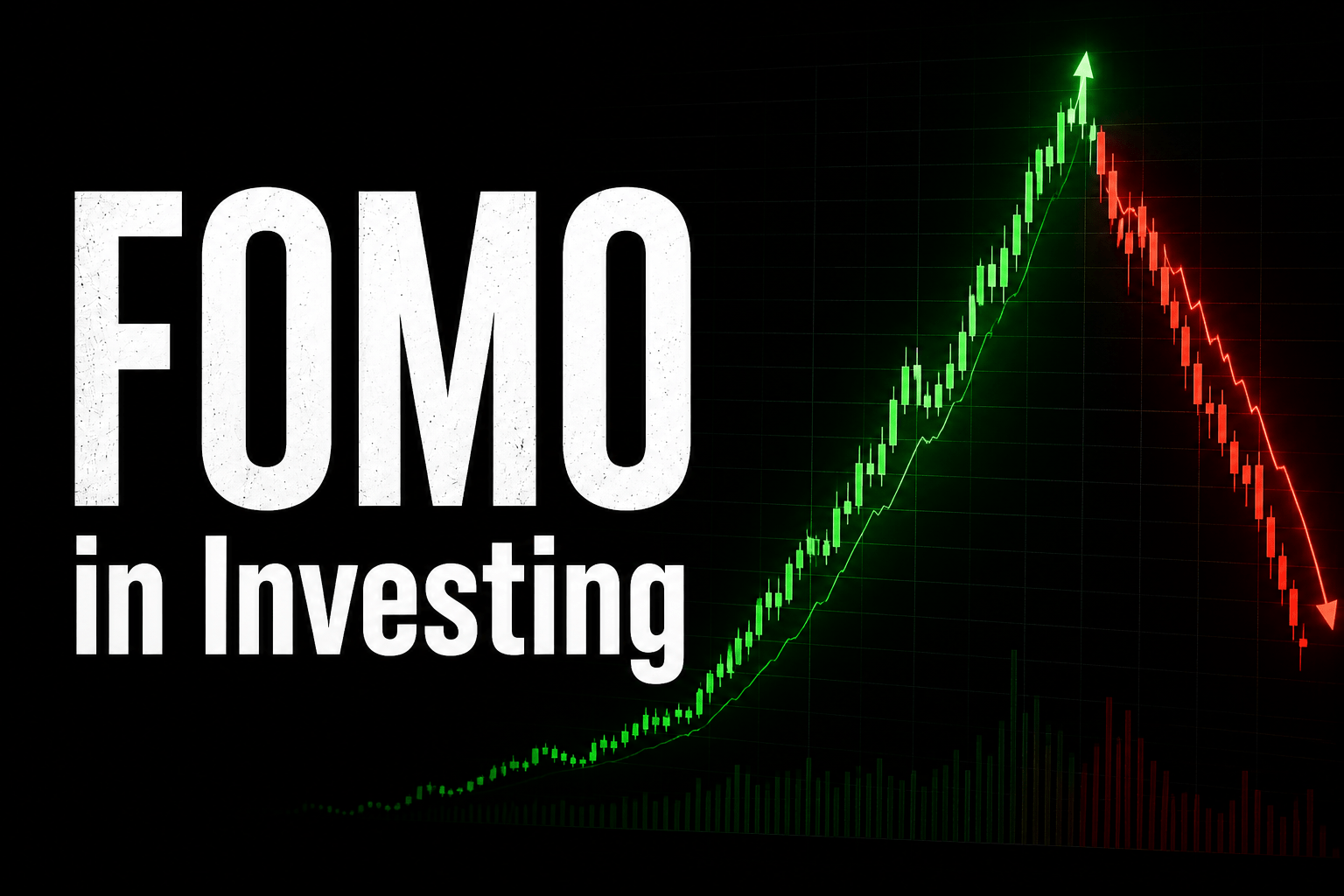
FOMO Investing: How Fear of Missing Out Destroys Long-Term Investors
Why Smart Investors Still Fall Into the FOMO Trap
There is a feeling almost every investor experiences at some point.
You open your phone.
A stock is up 20%.
Everyone online is talking about it.
People are posting screenshots of profits.
Friends suddenly become “investment experts.”
And within minutes, you start thinking:
“What if I’m missing out?”
That feeling is FOMO — the fear of missing out.
And while it feels harmless in the moment, FOMO has quietly destroyed more investment strategies than most people realize.
Not because people are unintelligent.
Not because they cannot analyze companies.
But because emotions become louder than logic when money moves fast.
FOMO Rarely Starts With Greed
Most investors think FOMO is about greed.
Sometimes it is.
But more often, it comes from comparison.
You see other people making money quickly, and suddenly your own long-term strategy starts feeling “too slow.”
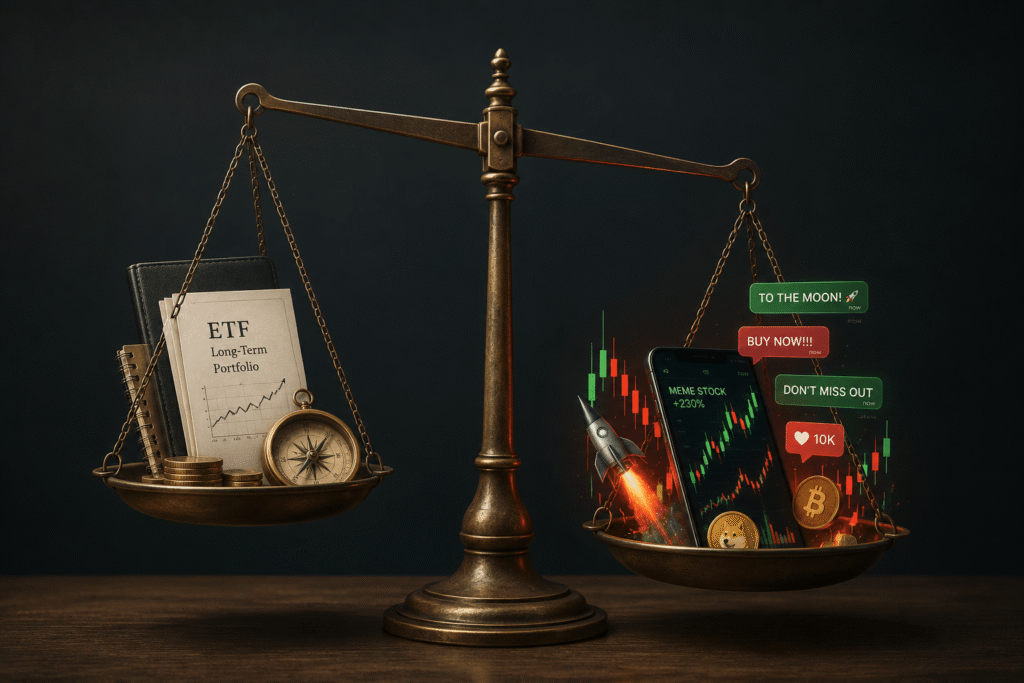
The boring ETF portfolio feels disappointing.
The dividend strategy feels outdated.
The steady investor feels foolish.
And that is dangerous.
Because once comparison enters your investing process, patience usually leaves with it.
The Meme Stock Mania
One of the clearest examples happened during the meme stock craze in 2021.
GameStop Corp. went from under $20 at the start of January 2021 to an intraday high above $480 within weeks.
Social media exploded.
People were becoming millionaires overnight.
Forums were filled with rocket emojis and screenshots of massive gains.
For many people watching from the sidelines, it felt unbearable not to participate.
So they bought.
Not because they understood the business.
Not because they had a valuation framework.
Not because they suddenly believed in the company’s long-term future.
They bought because everyone else seemed to be winning.
And that is exactly how FOMO works.
The problem?
Many investors entered near the top — after the excitement had already peaked.
Some people made life-changing money.
Many others suffered heavy losses once the excitement faded.
The emotional damage afterward was even worse.
People who chased the hype often lost trust in investing entirely.
Not because investing failed them.
Because emotions did.
Crypto FOMO Was Even Bigger
The same thing happened during crypto bull markets.
Bitcoin rising rapidly from thousands of dollars to new highs created a wave of emotional investing.
People who ignored crypto for years suddenly felt pressured to buy after hearing nonstop success stories.
Influencers talked about it.
Family members talked about it.
Social media made it seem like everyone was getting rich except you.
And once again, many investors entered only after massive rallies had already happened.
Some people bought simply because prices were going up.
That is not investing.
That is emotional momentum chasing.
There is a major difference.
Why FOMO Feels So Powerful
FOMO attacks something deeper than money.
It attacks identity.
When markets are euphoric, staying disciplined can actually make you feel stupid.
Imagine holding a steady portfolio of:
- Schwab U.S. Dividend Equity ETF
- Vanguard Total Stock Market ETF
- Invesco QQQ Trust
while someone online claims they doubled their account in two weeks trading speculative assets.
Suddenly, your strategy feels “boring.”
But boring is often what works.
The market does not reward entertainment.
It rewards discipline over long periods of time.
Unfortunately, FOMO convinces investors that slow progress is failure.
It is not.
The Real Cost of FOMO
The biggest danger is not just losing money on one bad trade.
It is destroying your entire process.
FOMO investors constantly jump:
- from stock to stock
- from trend to trend
- from strategy to strategy
They never stay consistent long enough for compounding to work.
And over time, emotional decision-making becomes a habit.
This creates a cycle:
- Watch others get rich
- Panic buy
- Buy too late
- Lose money
- Sell emotionally
- Repeat
Many investors spend years trapped inside this loop.
Long-Term Investors Often Look “Wrong” Temporarily
One of the hardest truths about investing is this:
Good investing often feels uncomfortable in the short term.
Patient investors sometimes look foolish during market manias.
The disciplined investor who ignores hype may underperform temporarily.
But over long periods, emotional consistency tends to beat emotional reactions.
That does not mean you can never invest in high-growth or speculative opportunities.
It means your decisions should come from:
- research
- conviction
- risk management
- position sizing
—not panic caused by social pressure.
A Better Question To Ask Yourself
Instead of asking:
“What if I miss this opportunity?”
Try asking:
“Would I still buy this if nobody online was talking about it?”
That single question reveals a lot.
Because true conviction survives silence.
FOMO usually does not.
Final Thought
FOMO is dangerous because it disguises itself as opportunity.
It whispers that everyone is moving ahead without you.
That you are late.
That you must act now before it is too late.
But successful investing is rarely built on urgency.
The investors who survive long-term are usually not the loudest.
They are not constantly chasing the next mania.
They are not rebuilding their strategy every month.
They simply stay consistent while others become emotional.
And in investing, emotional control is often a bigger advantage than intelligence.

Stefan Theron
Founder of Pathidon
Stefan holds a degree in Psychology and an MBA, and has spent years studying behavioral finance, market psychology, and the decision-making patterns that shape how people invest — bridging the gap between financial knowledge and human behavior.