
Time in the Market vs. Timing the Market: Why Patience Beats Prediction
The Temptation to Wait for the “Perfect Moment”
Every investor has felt it.
The market falls 10%, and you think, “Maybe I should wait. It might go lower.”
The market rises 20%, and you think, “I missed it. I’ll wait for a pullback.”
Then the pullback never comes. Or it comes much later, after prices have already climbed far beyond where you first hesitated.
This is one of the most common mistakes in investing: believing that success comes from perfectly timing when to buy and sell.
In reality, the evidence suggests something very different. For most investors, building wealth isn’t about timing the market. It’s about spending time in the market.
Why Market Timing Feels So Attractive
Humans naturally want certainty. We want to buy at the lowest point and sell at the highest. It feels logical and efficient.
The problem is that nobody consistently knows where those points are — not even professional fund managers and analysts who study this for a living.
Part of this comes from hindsight bias. Looking backward, market bottoms and tops seem obvious. Looking forward, they rarely are. So when markets get volatile, investors convince themselves that waiting is the smart move. What often follows is months — or years — spent sitting on cash while the market quietly recovers without them.
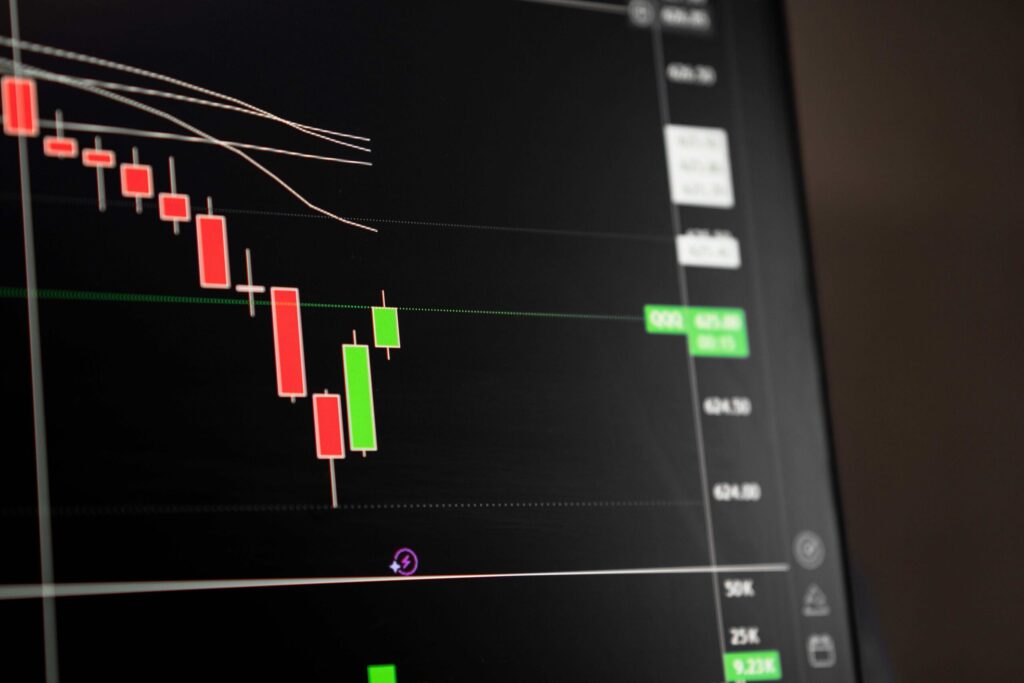
The Cost of Missing the Best Days
This is where the story stops being theoretical.
J.P. Morgan Asset Management has tracked this for two decades using real S&P 500 data, and the results are dramatic. Here’s what happened to $10,000 invested from 2004 through 2024, depending on how an investor behaved:
| Strategy | Annualized Return | What $10,000 Became |
| Stayed fully invested | 10.5% | Over $70,000 |
| Missed just the 10 best days | 6.2% | Under $35,000 |
| Missed the 20 best days | 3.6% | Roughly $20,000 |
| Missed the 30 best days | 1.4% | Barely above $10,000 |
Out of roughly 5,000 trading days across 20 years, missing only 10 of them cut the final account value in half. This isn’t a one-off finding either — Bank of America found the same pattern going back to 1930.
Why is this so hard to avoid? Because the best days and the worst days tend to show up right next to each other. J.P. Morgan found that 7 of the 10 best trading days of the past 20 years happened within just 15 days of the 10 worst days. The moment that feels most like the end of the world is often statistically close to the moment the recovery begins.
A Real Example: The COVID-19 Crash
This actually played out a few years ago, in real time:
- Feb 19, 2020: S&P 500 hits an all-time high of 3,386.
- Mar 23, 2020: It bottoms at 2,237 — a 34% collapse, the fastest drop of that size in the index’s history. Headlines were apocalyptic.
- Mar 24, 2020 — the very next day: The market jumps 9.4% in a single session, one of the best days ever recorded.
- By August 2020: Fully recovered to a new high.
- By December 2020: Sitting 16% above its pre-pandemic peak.
Anyone who sold near the bottom — which felt like the safe decision at the time — then had to decide when it was “safe” to get back in. Most people didn’t get back in by March 24. Many waited months, missing the sharpest part of the recovery entirely. Anyone who simply did nothing was fully recovered within five months.
Two Investors, Same Starting Point
Picture two people who each put $10,000 into the S&P 500 in January 2002.
Investor A stayed invested through everything — 2008, 2020, all of it. Over 20 years: ~9.5% annualized, growing to more than $60,000.
Investor B sold at the first sign of real trouble each time, waiting for things to “calm down” before buying back in — missing the market’s 10 best days along the way. Result: ~5.3% annualized, ending below $30,000.
Same starting amount, same market. The gap wasn’t intelligence — it was behavior, driven by fear at exactly the wrong moments. Scale that up to a $163,000 balance, and that gap is the difference between hitting $1,000,000 in 20 years versus needing an additional 15 years to get there.
Warren Buffett’s Favorite Holding Period
Perhaps no investor has emphasized patience more than Warren Buffett. One of his most famous lines is that his favorite holding period is forever.
His success wasn’t built on jumping in and out of investments. He focused on buying quality businesses and letting time do most of the work. Compounding needs time — a great company can have rough months and difficult years, but over decades, business performance tends to matter far more than short-term price swings.
The Psychology Behind Impatience
Investing is often treated as a financial activity. In reality, it’s largely a psychological one. A few biases drive most of the trouble:
Fear of loss. Losses feel more painful than equivalent gains feel rewarding — so investors often avoid investing after declines, even when conditions may be improving.
FOMO. When prices surge, people feel pressure to jump in before it’s “too late,” often buying after the gains are already made.
The illusion of control. We tend to believe we can predict outcomes better than we actually can. Markets are shaped by thousands of variables that are simply impossible to forecast consistently.
The Real Advantage: Patience
Patience is easy to underestimate because it feels inactive. Buying and holding doesn’t make for an exciting story. Predicting crashes and calling bottoms does. But patience has quietly built enormous wealth throughout history.
The market rewards ownership, not prediction. The longer you stay focused on quality investments and long-term goals, the less short-term noise actually matters.
What New Investors Should Remember
- You don’t need to predict the next crash.
- You don’t need to find the exact bottom.
- You don’t need perfect timing to build wealth.
- Consistency beats brilliance.
- Time is one of the most powerful assets you have.
The goal isn’t to be right every month. It’s to participate in long-term growth over many years.
Final Thought
The greatest investing advantage is rarely superior intelligence or perfect predictions. More often, it’s patience.
Markets will rise and fall. Headlines will create fear and excitement. But investors who stay disciplined and give their money time to compound discover a simple truth, one the numbers above keep proving: successful investing is less about finding the perfect moment, and more about making the most of the years ahead.
Past performance referenced above (S&P 500 index data, J.P. Morgan and Bank of America research) does not guarantee future results. Index returns do not reflect fees, taxes, or trading costs, and individuals cannot invest directly in an index. This article is for educational purposes and is not personalized investment advice.
Recommended Reading
📖 The Psychology of Money by Morgan Housel
This modern investing classic explores why behavior matters more than intelligence in building wealth, through simple stories and memorable real-world examples — an excellent read for new and experienced investors alike.
Disclaimer: This section may contain affiliate links, meaning Pathidon may earn a small commission at no extra cost to you.

Stefan Theron
Founder of Pathidon
Stefan holds a degree in Psychology and an MBA, and has spent years studying behavioral finance, market psychology, and the decision-making patterns that shape how people invest — bridging the gap between financial knowledge and human behavior.