

What Happens When the Stock Market Crashes? A Beginner’s Guide
Imagine opening your investing app one morning and seeing that your investments are down 15%. A few days later, they’re down even further. The news is full of uncertainty, and suddenly, something that felt like a good long-term plan doesn’t feel so comfortable anymore.
This is what a stock market crash can feel like.
But what actually happens when the stock market crashes? And what does it mean for someone who is just beginning to invest?
What is a stock market crash?
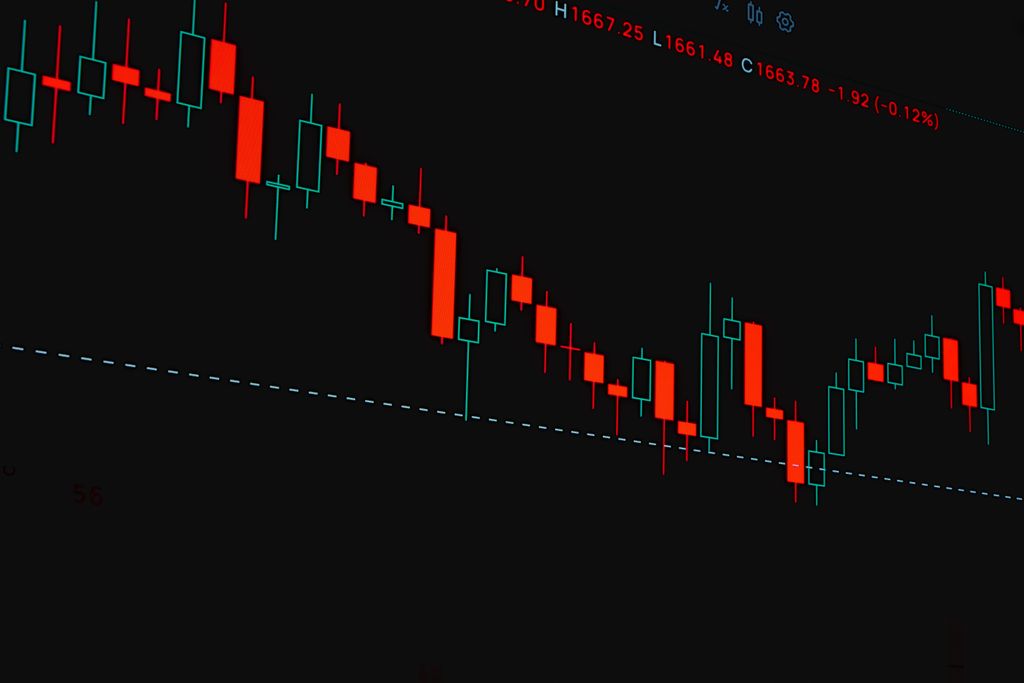
A stock market crash is a sharp drop in stock prices across the market, often happening over days or weeks. Longer, slower declines can also feel like a crash, especially when they continue for months. It can happen when investors become worried about the economy, a financial crisis, rising interest rates, or something unexpected.
As investors begin selling, prices fall. When fear spreads and more people sell, those declines can become even steeper.
You may hear people talk about the market falling 10%, 20%, or 30%. These numbers describe how far the market has fallen from a previous high.
While these declines can feel alarming, they are not unusual in the history of investing.
Why does the stock market crash?
Markets can fall for many reasons. It could be a recession, a financial crisis, geopolitical conflict, rising inflation, or concerns that companies may earn less in the future.
But markets don’t only react to what is happening today. They react to what investors believe might happen next.
When those expectations suddenly change, investors may rush to sell. And when falling prices create more fear, that fear can drive prices even lower.
Sometimes, the uncertainty itself becomes part of the problem.
What happens to your investments?
If you own stocks or an ETF that invests in many companies, the value of your investment will likely fall during a market crash.
Let’s say you invested $1,000 in an ETF that tracks a broad section of the stock market.
Before the crash
$1,000
After a 30% decline
$700
Your investment has lost $300 in value on paper. After a 30% fall, your investment needs to rise by about 43% just to get back to $1,000.
If you sell, you lock in that loss. If you continue holding, the value could recover, fall further, or take years to return to its previous level.
A decline in value isn’t automatically a permanent loss. But recovery is never guaranteed, especially when investing in individual companies.
Does the stock market always recover?
Historically, broad stock markets such as the S&P 500 have recovered from previous major declines and gone on to reach new highs. Two well-known examples illustrate this.
The COVID-19 crash (2020)
When COVID-19 spread around the world, markets fell sharply. The S&P 500 lost roughly a third of its value from its February peak to its March 2020 low. But the market recovered much faster than many people expected, eventually reaching new highs later that year.
The Dot-com crash (2000–2002)
The collapse of the dot-com bubble was a very different experience. After the technology boom of the late 1990s, the Nasdaq fell dramatically, losing roughly 78% from its peak to its low. It took nearly 15 years for the Nasdaq to return to its previous peak.
These examples show that markets can recover, but the timing and experience of each recovery can be very different.
This is one reason investing is often described as a long-term activity. Investing in a diversified group of businesses gives you exposure to their potential growth over many years, but that journey isn’t always smooth.
Recovery isn’t guaranteed everywhere. Japan’s stock market, for example, took more than 30 years to return to its 1989 high.
What should you do when the market crashes?
There isn’t one decision that is right for everyone. Your financial needs, time horizon, and the investments you own all matter.
But a few things are worth keeping in mind.
– Don’t panic. Making decisions out of fear can lead to choices you may regret. Take a moment to understand what you own and why you own it.
– Remember your plan. If you invested for a long-term goal, a market decline doesn’t necessarily change that goal. But if the reasons behind your investment have changed, it’s worth reassessing.
– Protect your financial needs. Money you need in the near future shouldn’t necessarily be exposed to the same risk as money you’re investing for decades. Having an emergency fund can also help prevent you from selling during a downturn.
– Don’t try to predict the bottom. Nobody knows exactly when a market will stop falling. Trying to time the perfect moment to buy or sell can be difficult, even for experienced investors.
Sometimes, sticking to a plan you have already thought through is more valuable than reacting to every headline.
The hardest part of investing isn’t always the numbers
When markets are rising, investing can feel easy. You see your investments grow, feel confident, and the future seems promising.
When markets fall, those feelings can change quickly. You may question your decisions, compare yourself to others, or feel the urge to sell before things get worse.
A market crash can test not only your investments, but also your behavior.
Understanding companies, ETFs, and markets is important. But understanding how you respond when things don’t go as expected is just as important.
Final thought
You don’t need to predict a market crash to become a good investor. And you don’t need to feel completely calm when one happens.
What matters is having a plan you understand, investments you know why you own, and a realistic idea of what you’re willing to endure along the way.
Markets will have difficult periods. Learning to navigate them is part of learning to invest.
Recommended reading
John Kenneth Galbraith
A classic account of the 1929 stock market crash, the speculation that preceded it, and the financial and psychological forces behind the collapse. A fascinating reminder of how enthusiasm, confidence, and fear can shape markets.
Recommended for understanding the history and psychology of market crashes.

Stefan Theron
Founder of Pathidon
Stefan holds a degree in Psychology and an MBA, and has spent years studying behavioral finance, market psychology, and the decision-making patterns that shape how people invest — bridging the gap between financial knowledge and human behavior.