SpaceX IPO: Should You Buy In — Or Is Your Brain Playing Tricks on You?
Is SpaceX a Good Investment at Its IPO Valuation?
What Just Happened
On June 12, 2026, SpaceX listed on the Nasdaq under the ticker SPCX at $135 per share — making it the largest IPO in history.
The company raised $75 billion at a valuation of $1.75 trillion. Before the offering even closed, investor demand had exceeded $250 billion — roughly 3.5 to 4 times the amount SpaceX was trying to raise.
To put that in perspective: investors wanted in so badly that for every dollar of stock available, there was $3.50 chasing it.
If that kind of demand makes you feel like you’re already behind, you’re not alone. And that feeling — right there — is exactly what this article is about.
Why SpaceX Captures Investors Like Almost No Other Company
SpaceX isn’t just a business. It’s a story.
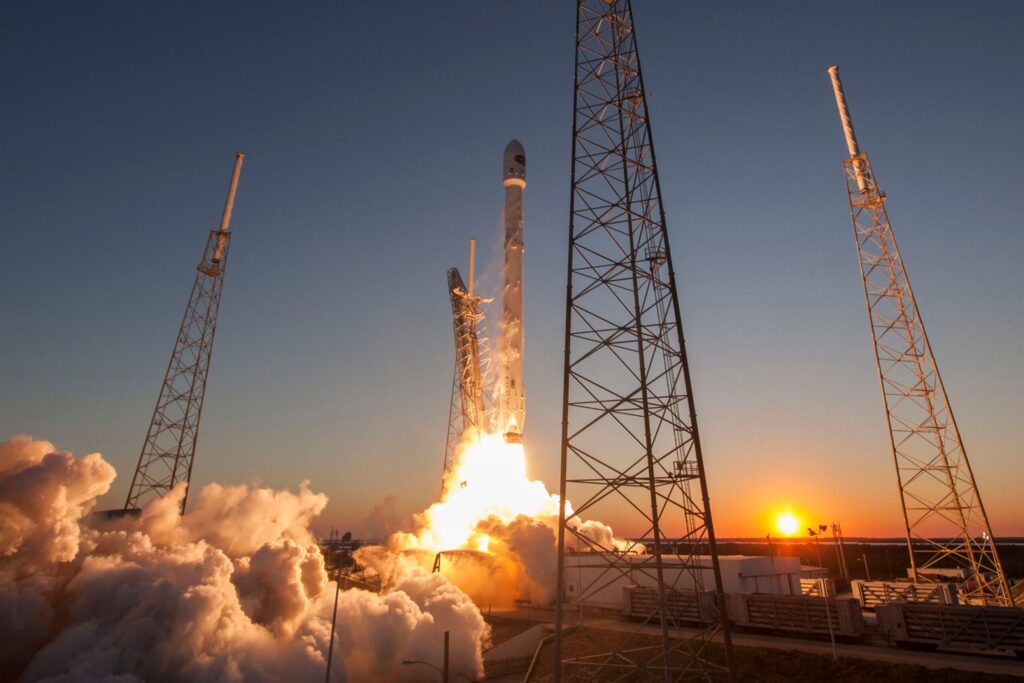
Reusable rockets. Tens of thousands of satellites circling the Earth. A goal to put humans on Mars. A founder who many people believe can do things others say are impossible.
That combination creates something very powerful in the human brain: narrative investing.
We are wired to respond to stories. A story about colonizing another planet is infinitely more exciting than a story about a company selling packaging materials or processing insurance claims.
This doesn’t make SpaceX a bad investment. It simply means our emotional response to the story often arrives long before our rational analysis does.
The Numbers Behind the Story
Let’s look at what you’re actually buying at $135 per share.
Revenue: SpaceX generated approximately $18.6 billion in 2025 revenue — roughly 40% growth year over year. Starlink, its satellite internet service, accounted for about 61% of that total.
Profitability: Before SpaceX acquired Elon Musk’s AI company xAI in February 2026, its core rocket and satellite business was generating an estimated $8 billion in annual profit. The xAI merger changed that. The AI segment posted a $6.36 billion operating loss in 2025, and another $2.47 billion loss just in the first quarter of 2026.
The valuation: At $1.75 trillion, SpaceX is trading at roughly 96 times trailing revenue. For comparison, Nvidia — one of the most celebrated growth companies of the past decade — trades at around 30 times revenue.
That number — 96 times revenue — doesn’t mean SpaceX is overpriced. It means the market is assuming an enormous amount of future growth has already happened. At that multiple, the price is only reasonable if Starlink keeps expanding globally, Starship reaches commercial scale on schedule, and the AI bet eventually pays off.
Everything has to go right.
The Psychology of “Missing the Next Big Thing”
Here’s something worth being honest about.
Many investors who are excited about SpaceX right now aren’t primarily thinking about revenue multiples or operating losses. They’re thinking:
“What if this doubles?” “What if I miss it?” “What if everyone gets rich except me?”
Psychologists call this FOMO — Fear of Missing Out.
It’s not a personality flaw. It’s a deeply human response to watching something generate enormous excitement while feeling like you’re on the outside.
But decisions made to avoid regret are often poor investment decisions.
The danger isn’t that FOMO feels bad. The danger is that it feels exactly like conviction.
A Great Company Is Not the Same as a Great Investment
This distinction gets lost in the noise of excitement.
You can genuinely believe:
- SpaceX has exceptional technology
- Starlink could reshape global internet access
- SpaceX could dominate commercial space for decades
And still ask a different question: At this price, what needs to be true for this to work out?
That’s not pessimism. That’s investing.
History offers a useful lesson here. During the dot-com boom, investors poured money into companies that genuinely were changing the world — internet infrastructure, e-commerce, communications technology. Many of those companies did go on to reshape modern life.
But investors who paid peak prices in 2000 often waited 15 years just to break even. The company was real. The story was real. The price was the problem.
SpaceX may be a different situation entirely. Or it may not. The point is that the question “Is SpaceX impressive?” has a clear answer. The question “Is SpaceX a good investment at $1.75 trillion?” is genuinely open.
The Elon Musk Effect
Any honest discussion about SpaceX has to include Elon Musk.
He owns 42% of the company’s equity and controls 85% of the voting shares. His track record of pursuing goals that seemed impossible — and occasionally achieving them — has built an almost unprecedented level of investor trust.
This creates a psychological pattern called the halo effect: when someone succeeds in one area, we unconsciously assume they’ll succeed in others.
Tesla worked. SpaceX worked. Therefore the xAI bet will work too.
Sometimes that assumption is correct. Sometimes it isn’t.
What matters for investors is that Musk’s reputation can make it harder to evaluate risks clearly. The very thing that makes SpaceX exciting — his involvement — is also something that can cloud objective judgment.
The Scarcity Effect
For years, ordinary investors couldn’t buy SpaceX at all.
It was private. Shares were available only to institutional investors and high-net-worth individuals. Secondary market prices were high and access was limited.
Behavioral finance research consistently shows that people place higher value on things that are scarce or difficult to obtain. The harder something is to access, the more desirable it seems — regardless of its underlying value.
Part of the excitement around the SpaceX IPO may simply be that investors spent years being told they couldn’t have it. Now that they can, the emotional pull is enormous.
That doesn’t mean the opportunity is bad. It means scarcity itself has been influencing how people have felt about SpaceX — and it’s worth knowing that.
Three Questions Worth Asking Before You Buy
1. Am I buying the stock, or buying the story?
Stories are exciting. Investments require analysis. Make sure your decision is based on a thesis — not a headline or a feeling of urgency.
2. What has to be true for this to work?
At 96 times revenue, SpaceX needs significant growth in Starlink subscribers, a successful Starship program, and a turnaround in its AI operations — all simultaneously. What happens if any one of those is delayed by a few years?
3. Would I still want this if nobody was talking about it?
This is one of the simplest ways to detect FOMO at work. If the answer is yes, your reasoning may be grounded in fundamentals. If the answer is uncertain, emotion may be playing a larger role than you realize.
What This Is Really About
The most valuable lesson from the SpaceX IPO may have nothing to do with rockets or satellites.
It’s a lesson in self-awareness.
SpaceX sits at the intersection of innovation, ambition, optimism, and speculation. Those forces can create extraordinary investment opportunities. They can also create prices that assume the future is already certain.
Investors often think the biggest risk is picking the wrong company. In reality, one of the biggest risks is allowing excitement to overpower discipline — paying a price that leaves no room for the unexpected.
SpaceX may go on to achieve remarkable things. The technology is real, the growth is real, and the opportunity could be real too.
But the most important question isn’t whether SpaceX impresses you.
It’s whether your enthusiasm for SpaceX is influencing your judgment — and whether you’re aware of it.
Final Thoughts
Successful investing isn’t about identifying companies that excite us.
It’s about identifying opportunities where expectations, valuation, risk, and long-term outcomes are genuinely aligned.
SpaceX may be that opportunity for some investors. It may not be for others.
The challenge isn’t deciding whether SpaceX is impressive. It is.
The challenge is deciding whether you can evaluate it clearly — or whether the story has already done the deciding for you.
That question is worth asking for every investment, not just this one.
Recommended Reading
The Psychology of Money by Morgan Housel
Rather than focusing on stock picking or finding the next big winner, this book explores how emotions, behavior, and expectations shape long-term investment outcomes. The psychological forces discussed in this article — FOMO, narrative investing, the halo effect, and emotional decision-making — are themes that run throughout it.
For investors navigating excitement around opportunities like SpaceX, it’s a valuable reminder that successful investing is often less about predicting the future and more about understanding yourself.
Disclaimer: This section may contain affiliate links, meaning Pathidon may earn a small commission at no extra cost to you.
Pathidon Takeaway: The strongest investors don’t just analyze companies. They analyze themselves. Before asking “Should I invest in SpaceX?” ask “Why do I want to invest in SpaceX?” The answer may reveal more about your future returns than any rocket launch ever will.

Stefan Theron
Founder of Pathidon
Stefan holds a degree in Psychology and an MBA, and has spent years studying behavioral finance, market psychology, and the decision-making patterns that shape how people invest — bridging the gap between financial knowledge and human behavior.