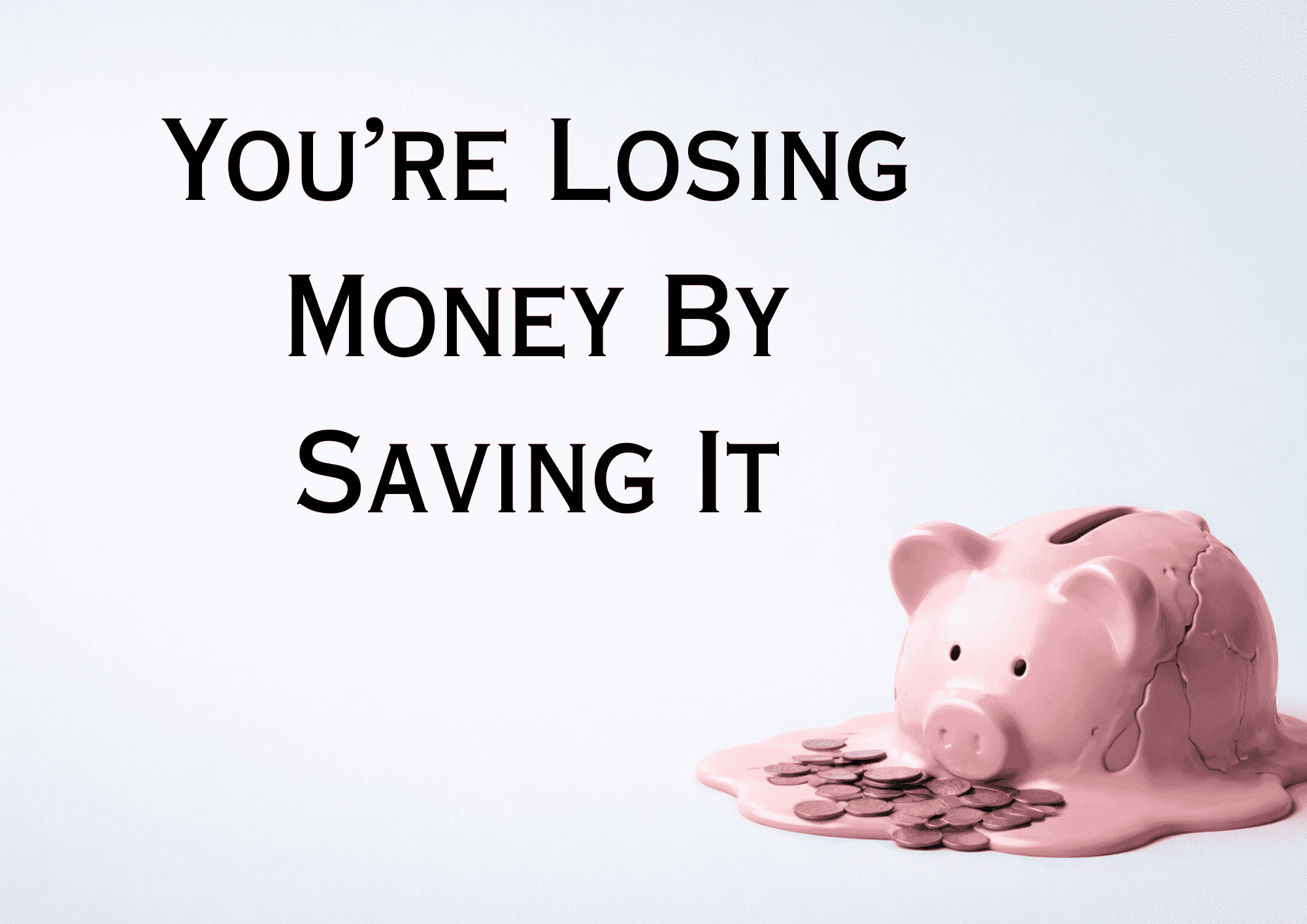
Why Saving Money Is Risky: How Inflation Quietly Destroys Your Wealth
The Unseen Reason to Invest
Most people believe saving money is the safest financial decision.
You work hard, put cash in a bank account, and feel responsible. That is what many people tell you to do.
But there’s a quiet problem most people don’t see:
Money loses value over time. Money loses power over time.
This is why simply saving cash is often not enough—and why investing exists in the first place.
Let’s break it down in the simplest way possible.

What Is Inflation? (In Plain English)
Inflation means things get more expensive over time.
- Groceries cost more
- Rent goes up
- Fuel, electricity, healthcare—everything slowly rises
This doesn’t usually happen all at once. It happens quietly, year after year.
Even at “low” inflation, prices still rise. Inflation is always there, pushing costs higher.
Purchasing Power: What Your Money Can Actually Buy
Purchasing power is just a fancy term for what your money can buy.
If:
- $100 buys you 10 items today
- But only 7 items in 10 years
Then your purchasing power has gone down.
You still have $100—but it’s weaker. The power of that $100 has gone down.
A Simple Real-World Example
Think about coffee ☕
- 15 years ago, a coffee might have cost $1
- Today, it’s closer to $4 or even $6
If you saved $1 under your mattress, it didn’t grow.
The coffee did.
Prices moved forward. Your money stayed still.
Why Bank Interest Isn’t Enough
Many people say:
“But my money earns interest in the bank.”
That’s true—but often:
- Inflation is higher than bank interest
- After taxes and fees, you still lose purchasing power
Your balance may grow slightly, but what it can buy shrinks.
It feels safe, but the loss is invisible. The bank interest is making your money lose its power.
Now do not get me wrong, saving money in the bank is not a bad thing. It is a good thing. It is good to always have some money in the bank to have money to use quickly and for normal things in life. A person needs to be liquid. However, for saving money long term, that is where the banking system is letting you down.
Why Investing Exists
Investing is not about getting rich quickly. It’s about protecting your future buying power.
Historically:
- Businesses grow
- Economies expand
- Assets like stocks, funds, and real estate tend to rise over long periods
Investing gives your money a chance to grow faster than inflation.
That’s the real goal.
The Behavioral Psychology Behind Saving Too Much Cash
Our brains love certainty. Cash and saving money in the bank feels certain. Cash feels safe because:
- The number doesn’t go down
- We can see it
- It doesn’t fluctuate
But our brains struggle with slow, invisible losses. We struggle to see the inflation taking a hold of us and bringing the power of our money down.
Inflation doesn’t feel painful in the moment — but over decades, it quietly erodes your financial freedom.
This is called money illusion:
We focus on the number, not what it can buy.
A key thing about investing, look at the whole specturm and study its history. You will see how it has grown and how many people have benefitted. Now, try to see how that compares to money in a bank, getting interest, but falling behind inflation.
Final Thought
Saving money is responsible. But only saving is risky in a way most people don’t notice or understand. Inflation doesn’t announce itself. It doesn’t cause panic. It just slowly takes a little more from your future every year.
Investing is not about beating the market or taking big risks.
It’s about giving your money a chance to keep up with life.
Cash preserves today. Saving money in a bank preserves today. Investing protects tomorrow. And understanding that difference is one of the most important financial lessons you’ll ever learn.