ETFs vs. Index Funds: Which Should You Choose?
ETFs vs Index Funds: What’s the Difference?
If you’re new to investing, you’ll hear a lot about ETFs and index funds. These two simple tools have become the starting point — and often the backbone — of most people’s investment portfolios.
This guide breaks them down in a friendly, easy-to-understand way, with just a small sprinkle of behavioral psychology to help you understand why they work.
1. What Exactly Is an ETF?
ETF stands for Exchange-Traded Fund.
Here’s the simplest way to think about it:
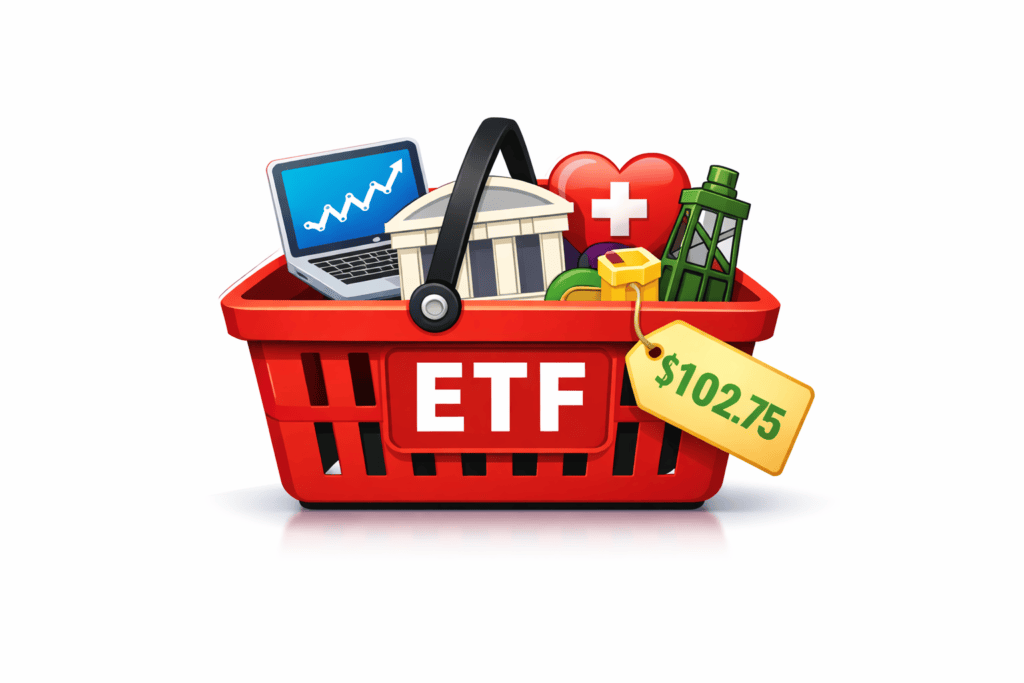
An ETF is one stock you buy that contains a basket of many different stocks.
So instead of buying Amazon, Microsoft, and Nvidia separately, you buy one share, and instantly own tiny pieces of many companies at once.
Why people like ETFs
- You can buy and sell them anytime during the market day
- Fees are low
- You get instant diversification (safer)
- Great for beginners who don’t want to pick stocks one by one
Example: QQQ
A popular ETF is QQQ, which tracks the NASDAQ-100 — a group of major tech-focused companies.
When you buy QQQ, you’re indirectly buying pieces of:
- Amazon
- Nvidia
- Apple
- Microsoft
If these companies rise, QQQ rises.
If they dip, QQQ dips too.
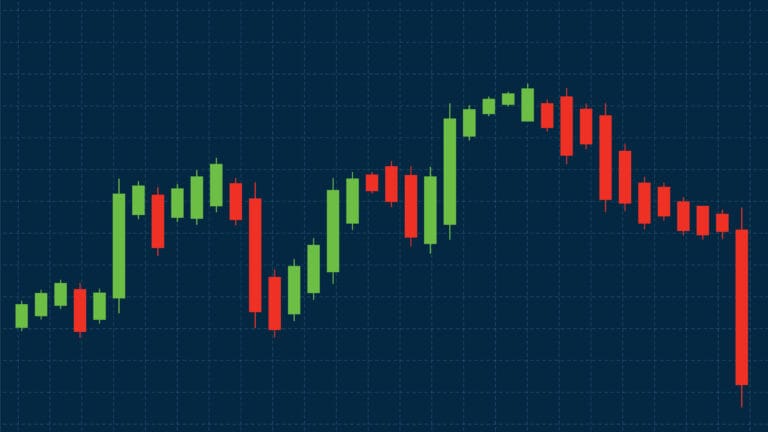
But because QQQ holds many companies, the movement tends to be smoother than holding just one stock on its own.
You still feel the ups and downs — but the dips are usually softer, and the climbs tend to be steadier.
2. What Is an Index Fund?
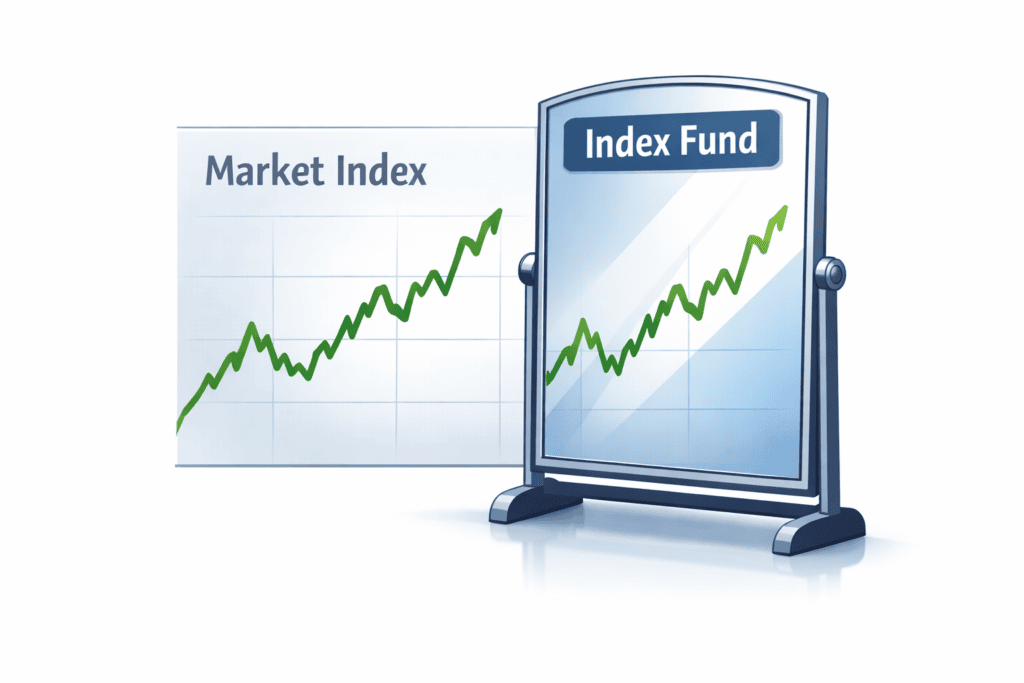
An index fund is very similar to an ETF in what it invests in — but the difference is how it trades.
- ETFs trade throughout the day
- Index funds trade only once per day, after the market closes
Why do index funds only trade once per day?
Index funds are priced at the end of the day so everyone gets the exact same, fair price. This structure avoids market swings that happen during the day and makes them calm, steady, and predictable.
Why this benefits investors
- Less temptation to trade emotionally
- A stable, low-stress investment experience
- Great for automatic monthly investing
- Ideal for long-term, hands-off strategies like retirement planning
If you prefer simplicity and consistency with zero distractions, index funds are a perfect fit.
3. Three Popular ETFs
- VOO — Tracks the S&P 500, giving you exposure to 500 large U.S. companies.
- QQQ — Tracks the NASDAQ-100, offering exposure to major tech and innovation leaders.
- VTI — Covers the entire U.S. stock market in one fund.
4. Three Popular Index Funds
- VFIAX — Vanguard’s S&P 500 index fund for long-term U.S. market exposure.
- VTSAX — Vanguard’s total U.S. market index fund, similar to VTI but structured as an index fund.
- FXAIX — Fidelity’s low-cost S&P 500 index fund, commonly used in retirement accounts.
5. Why Most Investors Use Them
A. They Remove the Guesswork
You don’t have to struggle and pick winning companies or predict market trends.
ETFs and index funds do the heavy lifting by spreading your money across many stocks automatically.
B. You Still Feel the Dips — But They’re Softer
These funds can absolutely drop when the market drops.
But because your money is spread out across dozens or hundreds of companies:
- A fall is usually gentler
- A rise is usually more consistent
- Your portfolio doesn’t depend on the fate of a single stock (or company)
This helps create a smoother, steadier investing experience.
C. They Grow With the Market
Historically, the stock market rises over time despite short-term ups and downs.
These funds are built to follow that long-term upward trend without needing special skills, timing, or constant monitoring.
D. The Balance Against a Single Stock
Owning just one stock means keeping up with its earnings, news cycles, leadership changes, and every bump in the road. With ETFs and index funds, you’re not relying on a single company — you’re trusting the natural rhythm of the market. The fund will rise at times and fall at times, but with patience and consistency, the long-term growth usually becomes the reward.
6. The Behavioral Advantage
A small but important psychology insight:
Most investors don’t struggle because they pick the “wrong” investment — they struggle because they find it hard to stay consistent.
Our brains like immediate rewards, quick wins, and reassurance. But investing thrives on patience, routine, and time.
ETFs and index funds encourage healthier investing behavior because they help you:
- Build patience — Their slow-and-steady movement shifts your focus from quick wins to long-term growth.
- Create automatic habits — Monthly contributions become a simple routine, not a stressful decision.
- Avoid impulsive choices — Since they hold many companies, you’re less tempted to react to every headline or individual stock’s drama.
- Stay calm during uncertainty — Diversification makes market swings feel more manageable and less personal.
Over time, these small behavior improvements compound just like your money does.
The investment vehicle matters — but the mindset these funds promote matters even more.
Final Thoughts
ETFs and index funds are popular for a simple reason: they make investing easier, smoother, and more consistent. By buying a single fund that holds many stocks, you get instant diversification, softer dips, steadier climbs, and a long-term strategy that’s easier to stick with.
For beginners — and even seasoned investors — these remain some of the most effective tools for building long-term wealth.