
The 5-Step Framework for Emotionally Intelligent Investing
Why Emotions — Not Knowledge — Drive Most Investment Mistakes
Most investment mistakes aren’t caused by a lack of knowledge.
They’re caused by emotion.
Fear during market drops.
Greed during rallies.
Regret after selling too early.
Overconfidence after a few good wins.
Emotionally intelligent investing isn’t about eliminating emotions — that’s impossible. It’s about building a structure to control those emotions before they control you.
This is my simple five-step framework:
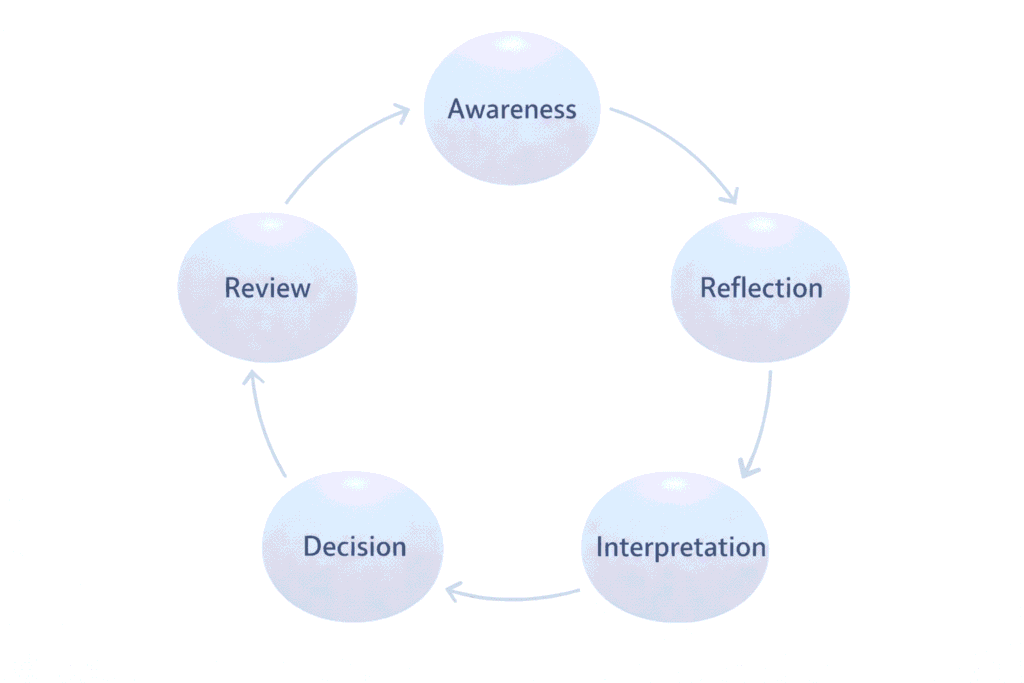
Step 1: Awareness — Notice the Emotion First
Every emotional mistake begins with an unnoticed feeling.
Before any investment decision, ask:
- What am I feeling right now?
- Did this feeling come from the market… or from inside me?
Markets move constantly, but your emotional reaction is the real signal. Remember, markets do move based on information, but it also moves based on human emotion.
Real-World Example
You open your investing app and see your portfolio down for the week. Your chest tightens slightly, and you feel an urge to “do something,” even though nothing in your plan has changed. That feeling is the signal — not the price movement.
Awareness isn’t about fixing anything. It’s simply recognizing that an emotion is present.
Step 2: Reflection — Understand Where It’s Coming From
Once you’re aware of the emotion, the next step is to understand its source.
Ask yourself:
- What triggered this feeling?
- Is this reaction based on recent price movement, news, or social media?
- Have I felt this way before — and how did it affect my past decisions?
Reflection helps separate market information from emotional noise. It helps you see whether your reaction is driven by facts or by repeated exposure to noise.
Real-World Example
You realize the discomfort didn’t start with the market drop, but after reading several negative headlines and checking prices multiple times a day. The emotion wasn’t created by the market — it was amplified by attention.
Often, the discomfort isn’t caused by risk — it’s caused by uncertainty and overstimulation.
Step 3: Interpretation — Find the Perspective
Interpretation means positioning the information correctly.
Examples of healthy positionings:
- A market drop becomes a temporary decline, not permanent failure.
- Missing a rally becomes acceptable discipline, not incompetence.
- Boredom becomes a sign of stability, not a reason to take risks.
Ask:
- How would a long-term investor view this situation?
- Does this moment actually require action — or patience?
Real-World Example
Instead of seeing a downturn as “losing money,” you view it as a normal part of long-term investing — one you’ve already planned for. Nothing about the strategy is broken. Only the perspective needed adjusting.
Reframing slows impulsive behavior and reconnects you with your long-term plan. Stick to your plan.
Step 4: Decision — Act With Intention, Not Emotion
Only after awareness, reflection, and reframing do you move to action.
At this stage, decisions should be:
- Aligned with your investment plan
- Based on rules, not feelings
- Consistent with your time horizon and risk tolerance
Ask the one simple question:
- Does this improve my strategy, or just relieve discomfort?
Real-World Example
Rather than selling during a stressful week, you stick to your plan or make a small, pre-planned adjustment — not to feel better, but because it fits your strategy.
Emotionally intelligent decisions are often less dramatic — and more effective. Intentional decisions feel calm, even boring. That’s usually a good sign.
Step 5: Review — Learn Without Self-Criticism
The final step is often skipped, but it’s essential.
After time has passed, review:
- What emotion did I feel?
- How did I respond?
- What worked — and what didn’t?
This isn’t about judging yourself. It’s about building self-awareness over time.
Every review strengthens your emotional skillset, making future decisions calmer and more consistent. As mentioned, the market does move on information, but also emotion. Manage your emotion, learn from your emotion, and you can become a better investor.
Real-World Example
A month later, you look back and notice that your strongest urge to act came at the emotional peak — not the market bottom.
Progress comes from reflection, not perfection.
Final Thought
Emotionally intelligent investing isn’t about being fearless or perfectly rational. It’s about creating space between feeling and action.
This five-step framework turns emotional reactions into thoughtful responses — and over time, that difference compounds just like good investments do. Emotionally intelligent investing is about pausing before you react.
Over time, this process helps emotions inform your choices — not control them.Markets will always test your emotions.
Your edge is having a process that keeps them from running the show.

Stefan Theron
Founder of Pathidon
Stefan holds a degree in Psychology and an MBA, and has spent years studying behavioral finance, market psychology, and the decision-making patterns that shape how people invest — bridging the gap between financial knowledge and human behavior.