

Why We Fear Investing
The Psychology of Inaction and Fear of Investing
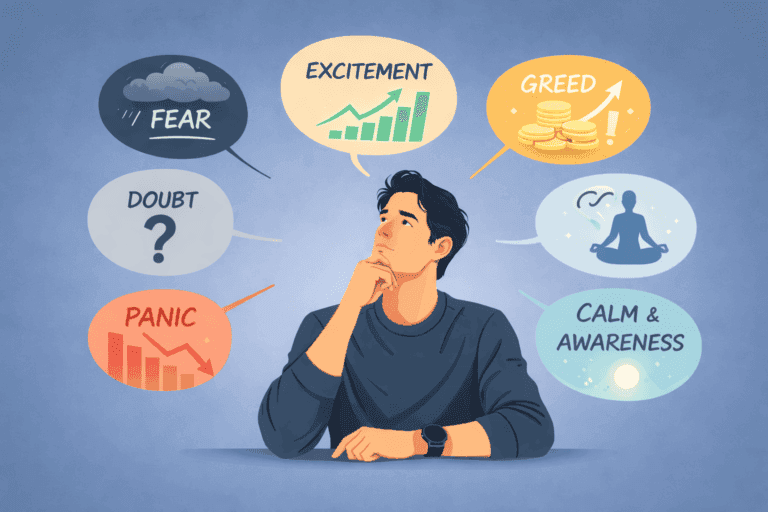
We all know investing is smart. But when it comes to putting real money on the line, hesitation creeps in. Why? Because our brains are wired to protect us — sometimes a little too much.
This article explores the psychology behind our fear of investing and how understanding it can help you take your first confident step forward.

1. Our Brain Hates Losing More Than It Loves Winning
Imagine this:
You flip a coin. Heads, you win $100. Tails, you lose $100.
Most people wouldn’t take the bet.
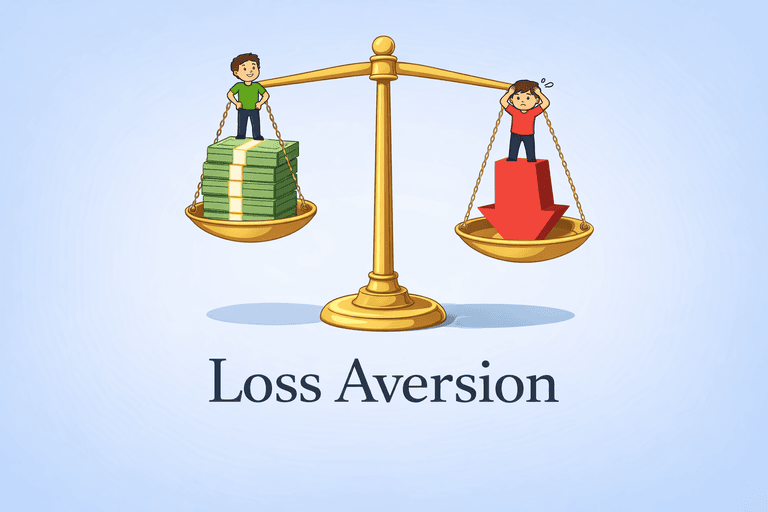
Even though it’s a 50/50 chance, losing $100 hurts far more than winning $100 feels good.
This is called loss aversion — and it’s deeply human.
Our brains evolved to avoid pain and danger. Back in the day, that meant staying alive. Today, it means we instinctively avoid financial risk — even when the risk is what helps us grow.
When you think about investing, that same ancient fear shows up:
“What if I don’t know enough?”
“What if I buy at the wrong time?”
“What if I lose my money?”
That fear doesn’t mean you’re bad with money — it means your brain is doing its job.
But to build wealth, we need to balance emotional safety with long-term opportunity.
2. The Fear of Regret Keeps Us Frozen
The thought of being wrong can be paralyzing.
Maybe you’ve told yourself:
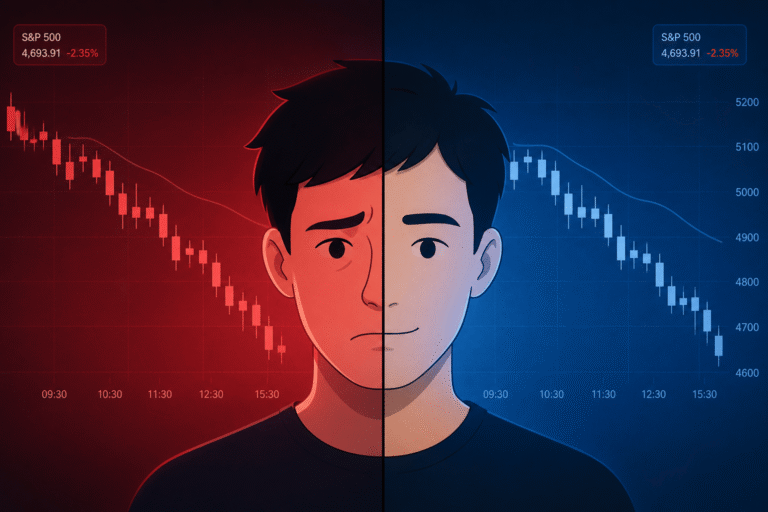
- “What if I invest now and the market drops?”
- “What if I wait and prices go up?”
- “What if I am too late?”
This is the fear of regret — the idea that if things go wrong, you’ll beat yourself up for choosing “badly.”
The mind tries to protect us from that future pain by avoiding the decision altogether.
But here’s the catch: inaction is still a decision.
And over time, not investing often becomes the most painful regret of all.
3. The Illusion of ‘Knowing Enough’
A lot of beginners think they need to fully understand the market before they invest.
But even professional investors don’t always get it right — and they don’t wait for perfect knowledge either.
Markets are unpredictable. What matters is your process, not perfection.
Start small. Invest small. Choose a simple, diversified ETF stock.
Think of investing not as a test of knowledge, but as a habit of growth.
You’ll learn along the way — and that’s the point.
4. Fear Is Normal — and It’s a Good Sign
Feeling nervous about investing doesn’t mean you’re unprepared.
It means you care and you want to do things right. And that is good.
Fear is energy — and you can redirect it.
Instead of letting it stop you, use it as a reminder that you’re stepping into something meaningful.
Growth always begins with uncertainty. Growth always begins with taking that first step.
Even small actions matter:
- Open your first investment account.
- Invest a small amount each month.
- Keep learning and observing, without pressure to “get rich.”
You’ll build comfort through experience — not before it.
5. The First Step Is the Most Important One
Every confident investor you see today once stood where you are now — uncertain, cautious, hesitant.
They didn’t wait to feel ready. They just started.
You don’t need to be fearless to invest.
You just need to be curious enough to begin.
Start small. Start simple. But start.
Your Turn: Move From Thought to Action
Here’s your challenge for this week:
- Write down one reason you’ve been afraid to invest.
- Write one small action you can take today.
- Open a free brokerage account.
- Set aside some money to invest (even $100 a month).
- Read about ETFs or popular stocks.
- Open a free brokerage account.
You don’t need a perfect plan — just forward motion.
Because the truth is, the longer you wait to begin, the more you teach your fear that it’s in control. So today, flip that coin.
Your future self will thank you.
Final Thought
Investing isn’t just about money — it’s about mindset.
Understanding your fear gives you power over it.You don’t need to be an expert.
You just need to start where you are, with what you have, and trust that progress comes with time.

Stefan Theron
Founder of Pathidon
Stefan holds a degree in Psychology and an MBA, and has spent years studying behavioral finance, market psychology, and the decision-making patterns that shape how people invest — bridging the gap between financial knowledge and human behavior.



3 Comments
Comments are closed.